Historical Costumes – Bonumsartores.com
Coats and Outerwear in the Middle Ages
In the Middle Ages, cloaks were an essential part of the wardrobe, worn by all social classes. Their primary function was protection against cold, rain, and wind, but their symbolic and aesthetic significance was equally important—a cloak could indicate status, class affiliation, or even function.
In the 12th and 13th centuries, simple cloaks with a semicircular or rectangular cut, fastened with a brooch or tied at the shoulder, predominated. Surcoats, cappas, and mantles were popular, often sleeveless, worn over a tunic, and reaching to the ankles. Fabrics were usually wool, densely woven, and sometimes lined with linen or fur for added insulation. Wealthy individuals adorned their cloaks with embroidery, fur trim, and decorative clasps.
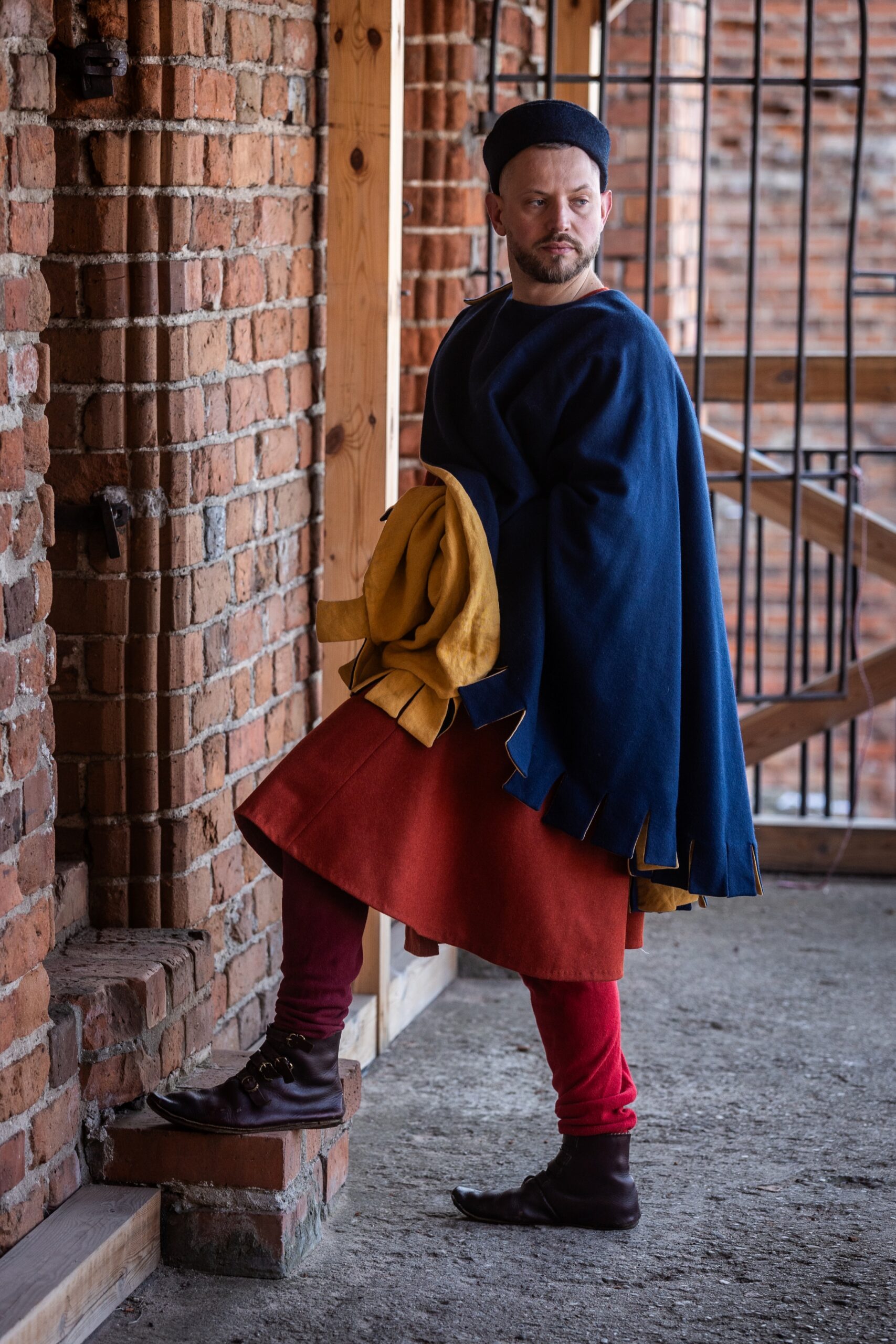
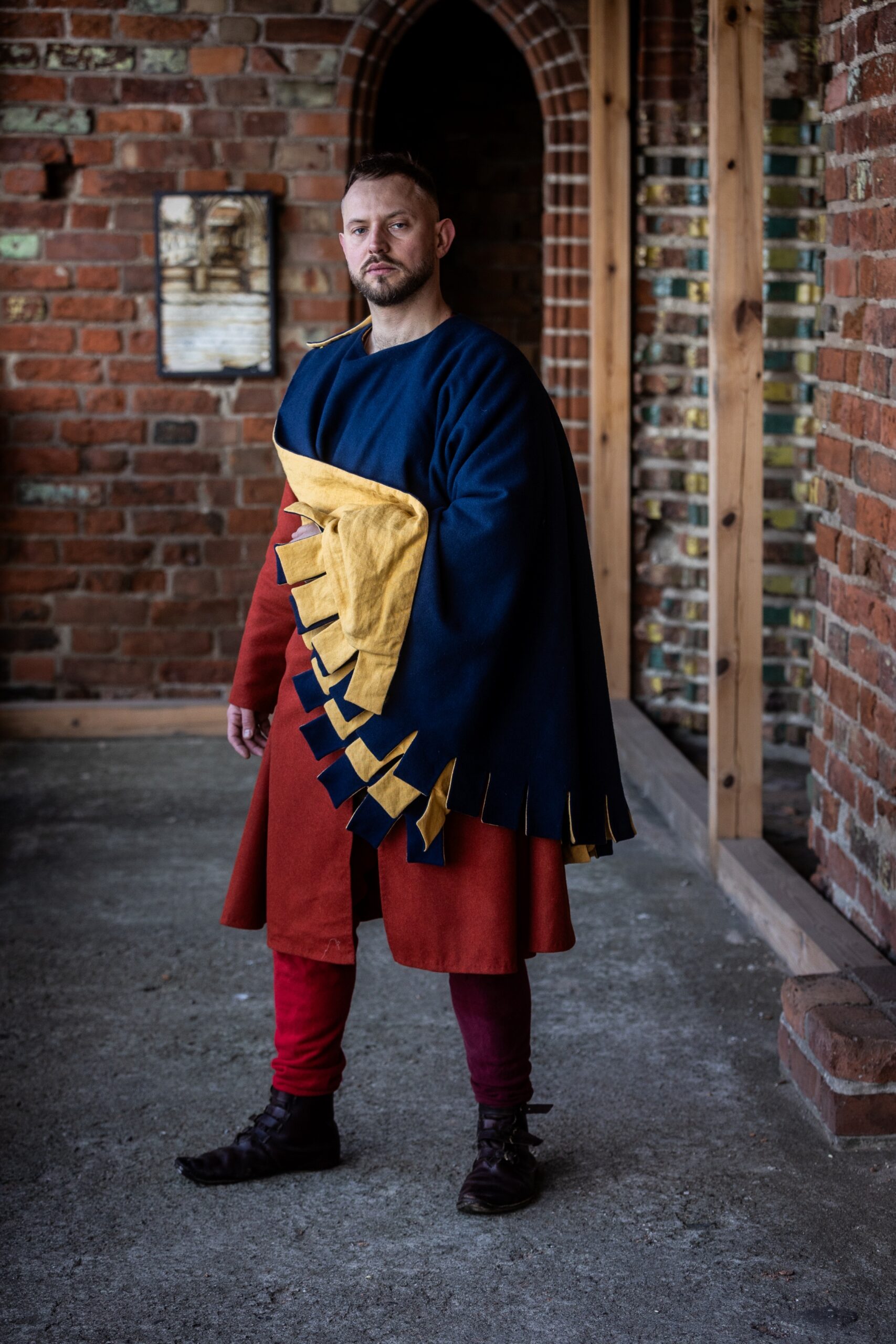
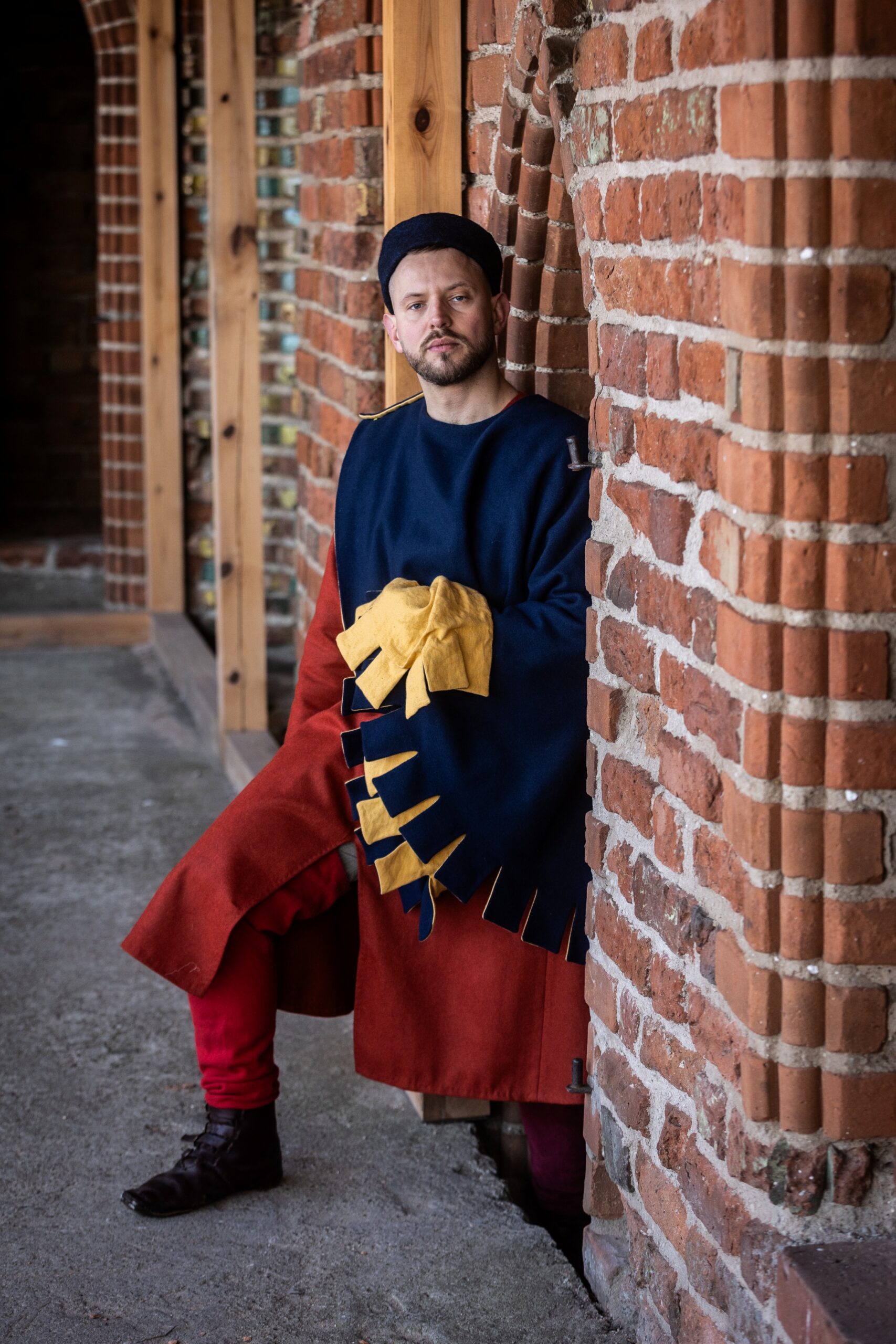
In the 14th century, more diverse cuts began to appear, often tailored to the figure. Cloaks became more elegant and a staple of courtly fashion. In the 15th century, the houppelande—a voluminous outer garment with deep pleats, a high collar, and wide sleeves, often adorned with fur or cut-out edges—became particularly popular. During this period, cloaks were made of high-quality cloth and velvet, emphasizing the wearer’s wealth and status.
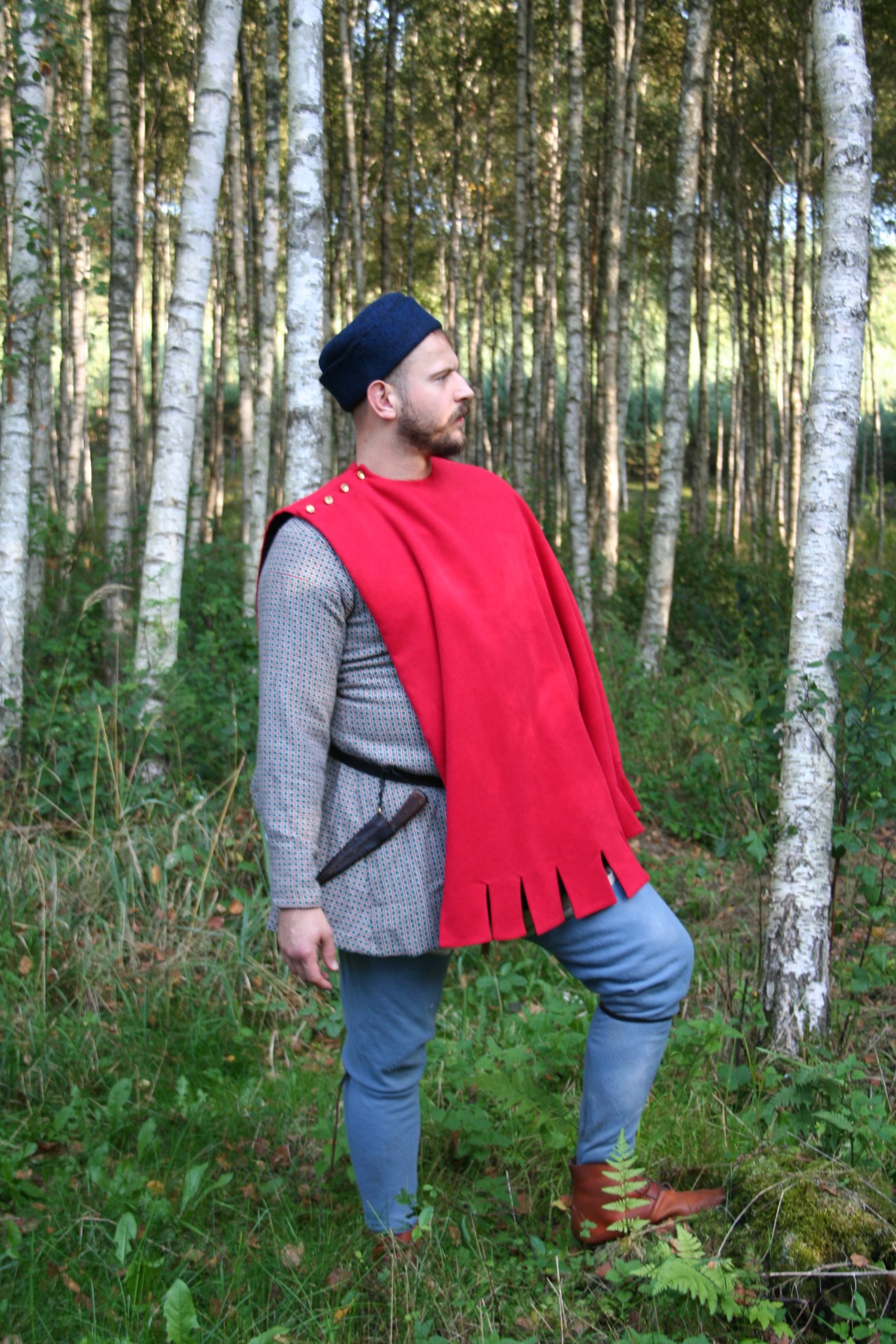
Short cloaks, worn over one shoulder, often adorned with cut-outs, also became increasingly popular.
Outerwear accompanied people in every situation—from everyday activities to ceremonies and travel. Practical versions, such as surcoats or hooded cloaks, provided protection in harsh conditions, while ceremonial garments expressed the prestige and style of the era.
The cloaks of knightly orders such as the Templars, Hospitallers, and Teutonic Knights were particularly important. Their cuts were simple and functional, but they were distinguished by colors and symbols—most often white or black cloth with a distinctive cross. The monastic mantle was not only a garment, but also a sign of belonging, dignity and service.
Related products
-
Medieval Women Hose
57,05 € This product has multiple variants. The options may be chosen on the product page -
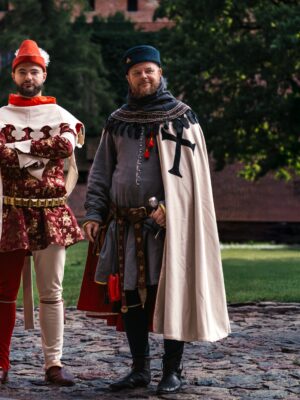
Medieval Wool coat 1/2 circle
Price range: 319,47 € through 353,69 € This product has multiple variants. The options may be chosen on the product page -

Cotte simple wool type 2- Medieval dress 14th/15th century
Price range: 284,95 € through 296,12 € This product has multiple variants. The options may be chosen on the product page -
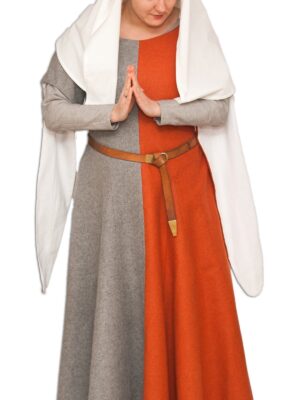
A dress with cutouts
353,34 € This product has multiple variants. The options may be chosen on the product page