Historical Costumes – Bonumsartores.com
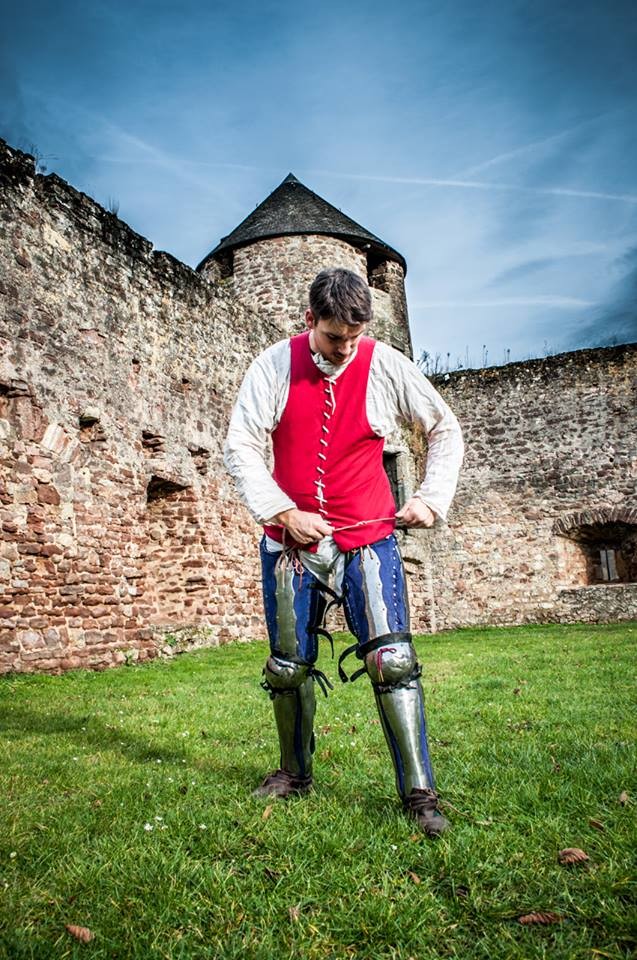
A lacing vest was a quilted or reinforced jerkin to which armor and leggings were attached using straps or cords. It allowed for secure attachment of armor and clothing, constituting a practical and essential element of medieval men’s attire.
Sewn from three layers of linen. It fastens with a woolen cord with a ferrule. Cord included.
The vest has standard lacing holes; they are not individually tailored to your measurements or armor.
Machine-sewn, with hand-finished buttonholes.
Dating: 14th-15th century
106,22 €
A waistcoat was a practical element of medieval men’s attire, worn under armor or as an underlayer beneath outerwear. Its main function was to allow the attachment (strapping) of individual elements of plate armor – particularly the breastplate, backplate, and leg guards – using leather straps or cords passing through special holes or hooks.
Such jerkins, often quilted or reinforced, allowed for even distribution of the armor’s weight and increased comfort while wearing. Over time, waistcoats also began to be used to attach hose, before fully sewn-on trousers appeared. As a result, they formed an important link in the evolution of medieval clothing – combining protective, structural, and utilitarian functions in a single garment.
Keywords: medieval costumes, historical costumes, historical reconstruction, waistcoat, armor, leggings.