Historical Costumes – Bonumsartores.com
Men’s Medieval Costume
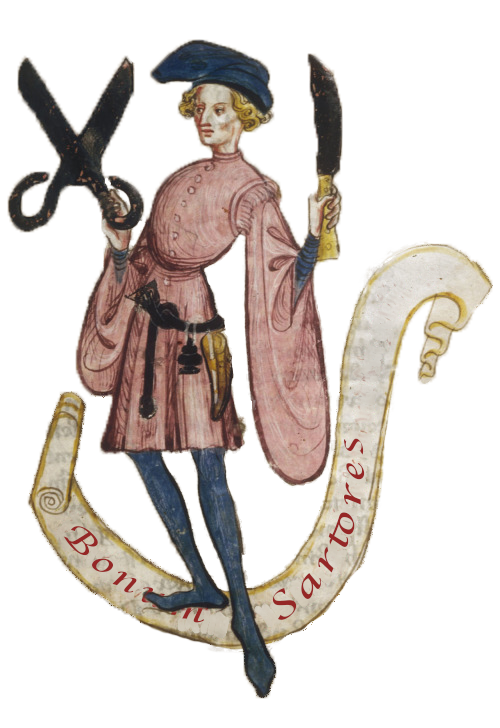
Medieval men’s fashion reflected not only social status but also the cultural, technological, and aesthetic changes of the era. From the simple, functional tunics of peasants to the richly decorated robes of the court, medieval men’s clothing was an important element of identity and prestige.
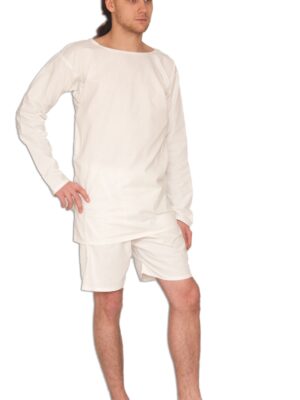
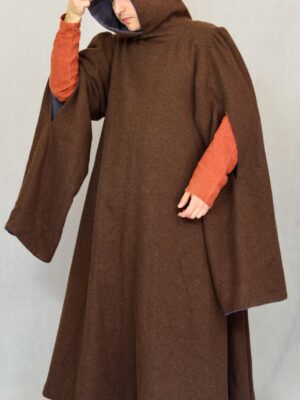
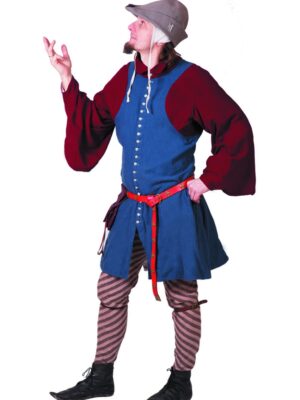
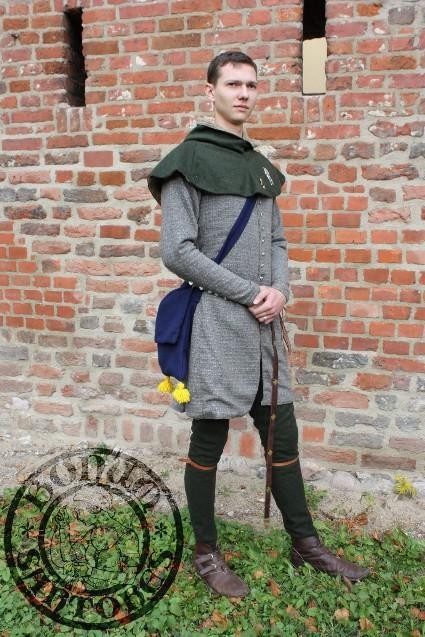
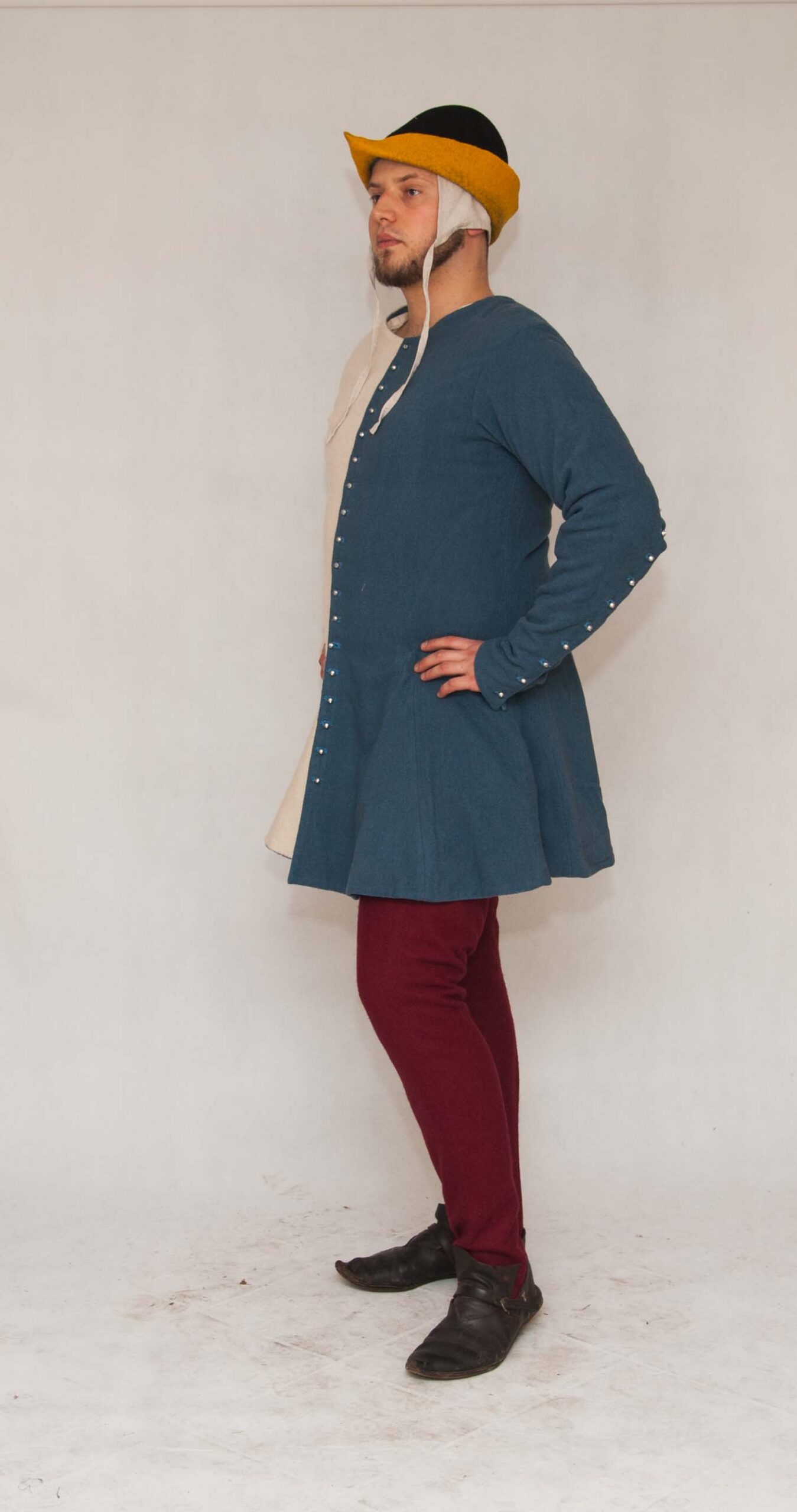
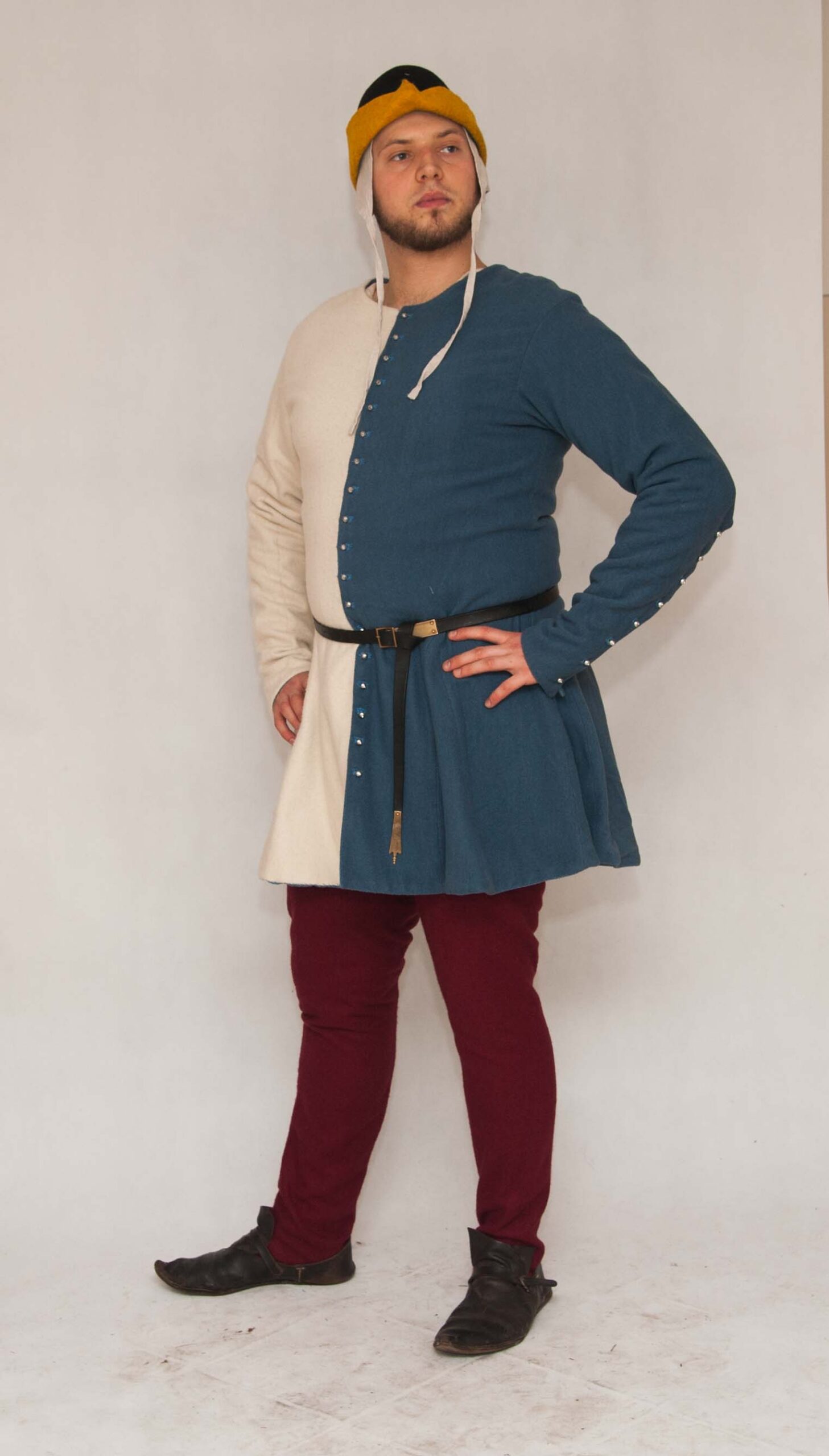
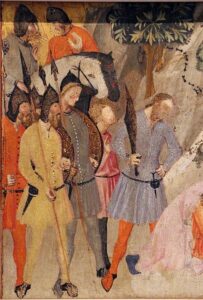
The foundation of men’s attire was the tunic – a simple garment worn over linen undergarments. Over time, especially from the 14th century onwards, tunics became increasingly fitted, accentuating the silhouette. Outer layers consisted of cloaks, surcoats, and doublets, whose forms changed with fashion and function. In colder seasons, hoods, capes, and fur-lined cloaks were also worn, adding both warmth and splendor.
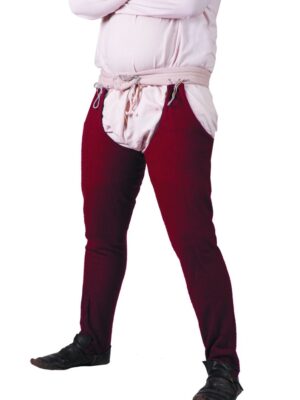
The layers were complemented by leggings or trousers tied to the doublet, and the overall look was completed by a belt, bag, gloves, and headgear – from simple bonnets to ornate hats and chaperones. Materials and colors varied according to status: rural folk used wool and linen in natural colors, while the nobility and townspeople chose dyed fabrics, silks, velvets, and furs.
Men’s clothing in the Middle Ages combined practicality and symbolism—it was an expression of tailoring craftsmanship, innovation in cut, and the social significance of clothing. Today, it remains a fascinating source of inspiration for reenactors, researchers, and history buffs who strive to recreate the techniques, materials, and aesthetics of the era.
Keywords: medieval men’s clothing, tunic, doublet, cloak, hose, medieval fashion, historical reconstruction, historical clothing, 14th century, 15th century
Related products
-

Oval neck shirt
46,03 € This product has multiple variants. The options may be chosen on the product page -
Hose type 1
Price range: 99,14 € through 110,94 € This product has multiple variants. The options may be chosen on the product page -
Traveling Surcoat
330,46 € This product has multiple variants. The options may be chosen on the product page -
Pourpoint with baggy sleeves
Price range: 306,85 € through 377,66 € This product has multiple variants. The options may be chosen on the product page