Historical Costumes – Bonumsartores.com
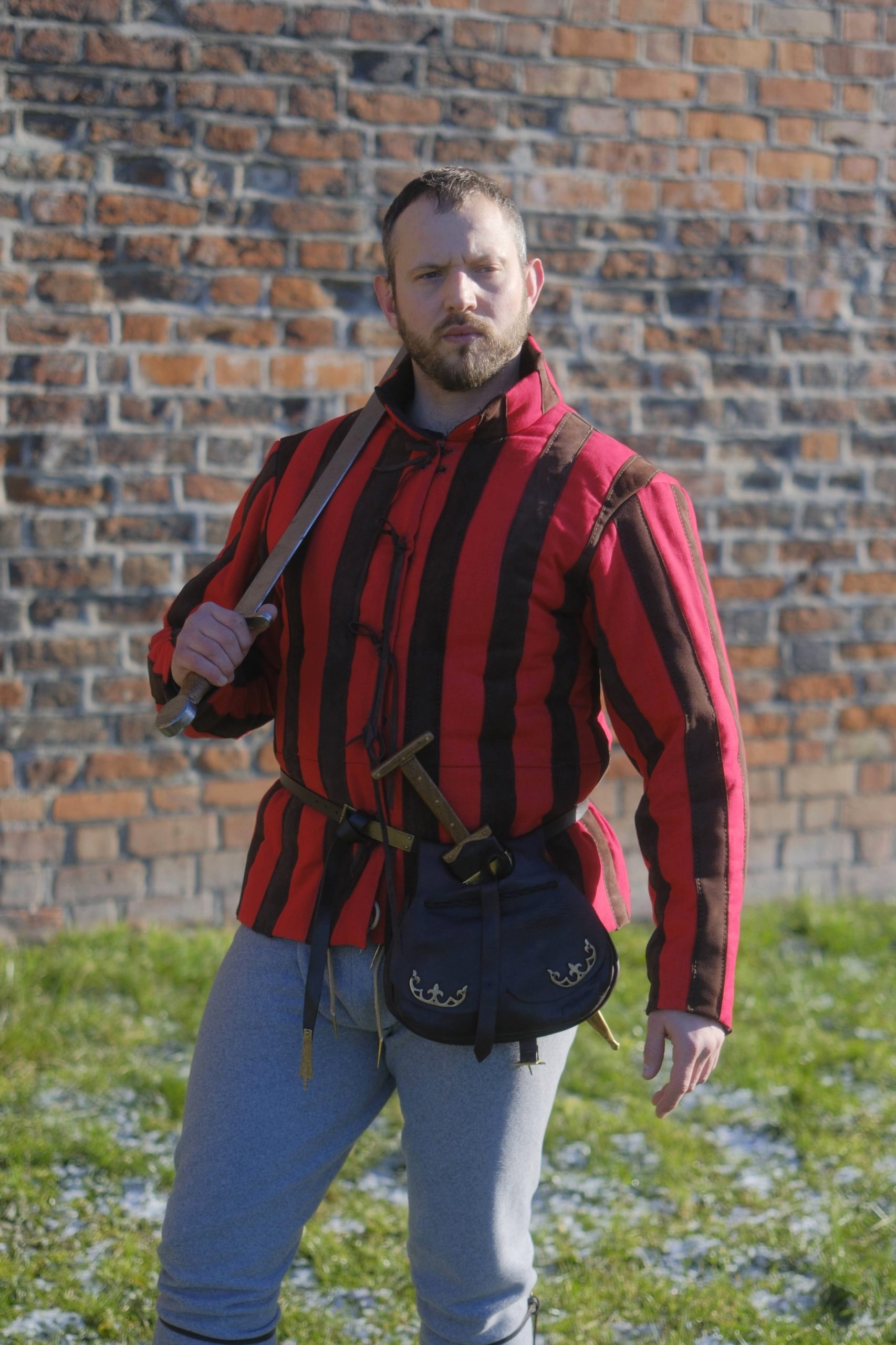
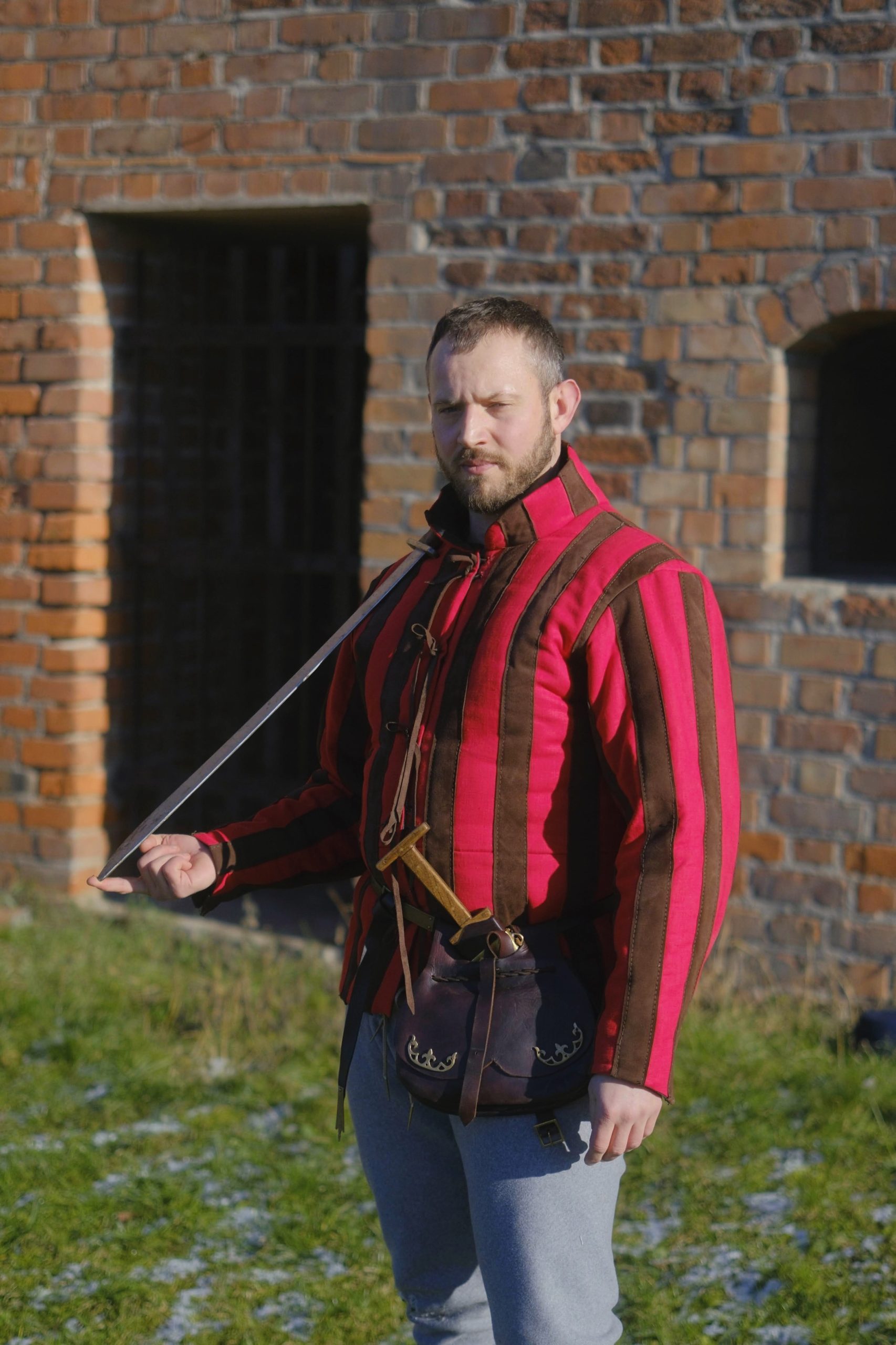

The arming doublet is a specialized version of the medieval doublet, designed to be worn under plate armor. The combat doublet was a key element of knightly equipment from the 14th to the 16th centuries, providing both comfort and protection during combat. Its function was to evenly distribute the weight of the armor and to hold the armor in place using leather straps or metal hooks.
The doublet, as a piece of clothing, appeared in the 14th century and initially served as a warming layer worn under outerwear. As medieval fashion developed, its cut changed, becoming increasingly fitted, accentuating the figure. The arming doublet, on the other hand, was stiffened with additional padding, often quilted, which cushioned blows and increased the comfort of the armor.
It was made of durable materials such as thick wool, linen, or leather, and the interior was filled with layers of wadding or wool felt for added protection. This model is made of durable linen fabric and reinforced with stitching, faithfully capturing the functionality and character of a medieval combat doublet.
You can also wear the doublet in a civilian version.
Our combat doublet consists of:
- a linen outer layer for durability and comfort,
- a linen lining,
- linen reinforcement under the outer layer,
- a natural wool filling for insulation and comfort.
The standard doublet has one layer of filling, plus additional reinforcement on the chest, hips, shoulders, spine, and lumbar region, as well as the biceps, elbows, and forearms. The sleeves under the arms and in the crooks of the elbows are unfilled to facilitate free arm movement.

Italy, 15th
Related products
-

Combat Surcoat Type 2
307,75 € This product has multiple variants. The options may be chosen on the product page -
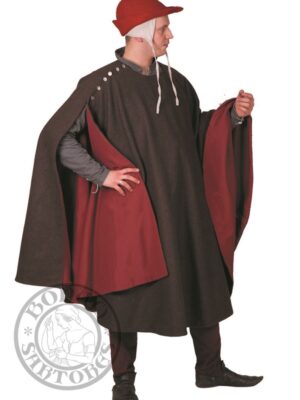
Full circle medieval coat
Price range: 548,23 € through 571,08 € This product has multiple variants. The options may be chosen on the product page -

Cottehardie type 4- Short-Sleeved Cottehardie with “Dog Ears”
262,15 € This product has multiple variants. The options may be chosen on the product page -
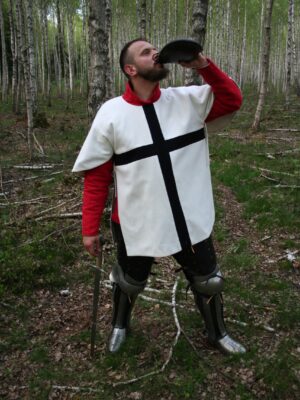
Waffenrock Zakon Krzyżacki
125,55 €