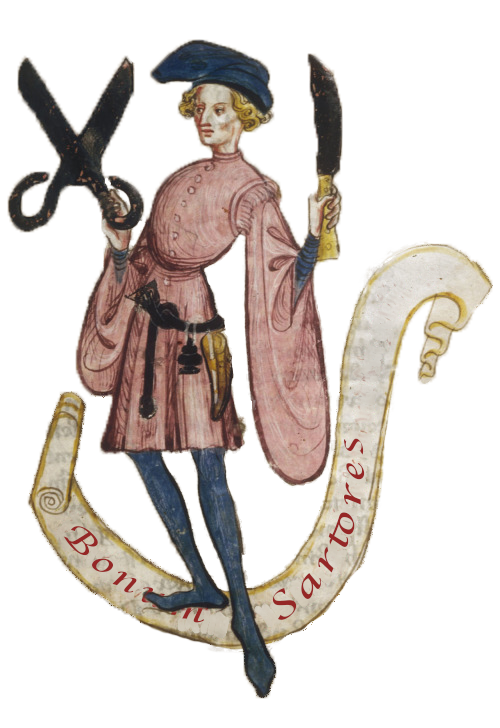
A Mini Guide: How to Build a Medieval Reenactment Kit
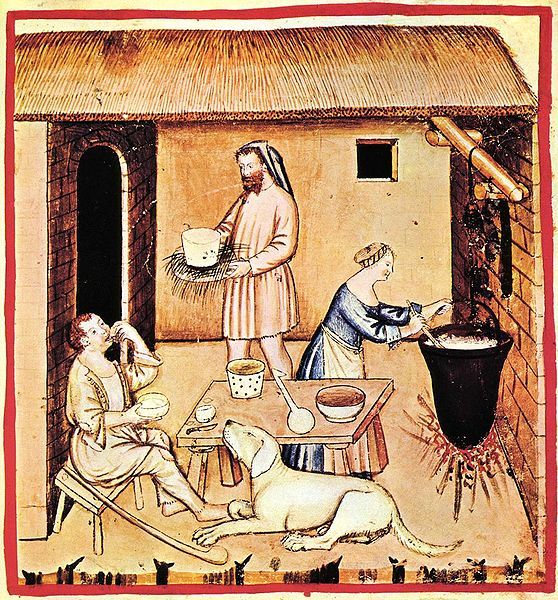
So, it happened. You played Kingdom Come: Deliverance, finished reading Narrenturm, or came back from a reenactment of the Battle of Grunwald and decided that next year you would like to experience an event like this from the other side — as a historical reenactor.
Then you started searching the internet and somehow ended up with more questions than answers. Maybe you bought a few “medieval” garments from a market stall, only to discover later that Vikings did not actually wear horned helmets and medieval princesses looked very different from their Disney counterparts.
Don’t worry. This short guide will help you find your way around the world of historical reenactment, focusing on one of the most popular periods currently reenacted in Poland: the late 14th and early 15th centuries.
The Most Important Rule for Beginners
Don’t start by buying clothes. Start by deciding who you want to portray.
There are two basic ways to begin your adventure with historical reenactment.
The first is to find a local reenactment group focused on the period that interests you and build your impression within the historical setting the group already represents.
The second is to answer a few basic questions yourself:
When? Where? Who was this person? What was their social status?
Of course, you do not need to begin by digging through medieval records in search of one specific historical person to portray. Most reenactors do not start by creating elaborate fictional biographies for their characters.
Over time, however, as reenactment becomes a bigger part of your life, you may want to develop your impression further, give your character more background and gradually add new items of clothing and equipment.
But you certainly do not need a complete biography on day one.
Medieval fashion is an enormous subject. Without answering at least a few of these basic questions, your outfit is far more likely to resemble a mediocre cosplay or stage costume than a historical reconstruction.
❌ “I want a medieval outfit.”
✅ “I want to portray a townsman from Northern Europe around 1380.”
✅ “I want to portray a moderately prosperous woman from Northern Europe around 1410
✅ “I want to portray a knight from Northern Europe around 1410.”
Suddenly, things become much easier.
You know what sources to look for, what garments to research, what materials you might expect to find and — most importantly — which items actually make sense for your impression and which merely “look medieval”.
There is also a very good chance that, at the beginning, you simply do not know yet.
Perhaps you are somewhere between “I want a medieval outfit” and “I know exactly whom I want to portray”. Maybe your budget is limited, or you simply do not want to invest in an elaborate kit right from the start.
That is perfectly fine.
And that is exactly where we are going to begin.
Start with… Underwear
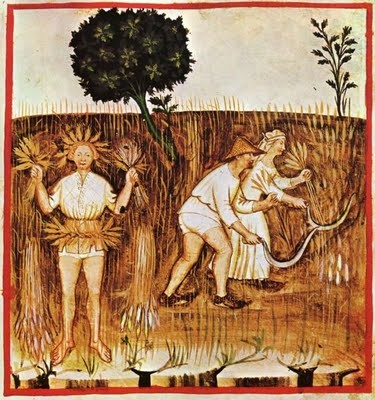
Before you put on a tunic, hose or cloak, we need to begin with the layer that is often invisible in reenactment photographs — unless you happen to find yourself at Grunwald on a particularly hot Friday morning. We are talking, of course, about underwear. Fortunately, medieval underwear is also well represented in contemporary iconography.
Underwear was an essential part of medieval clothing and served both hygienic and protective purposes. For men, the basic garments were a linen shirt and braies, while women wore a chemise. Medieval underwear was most commonly made of linen: a durable, breathable fabric that could be washed relatively easily.
Men also need hose, while women can complete their outfit with short hose.
When putting together a male kit, remember about a garter belt and a set of cords finished with aglets, or small metal tips. Modern trousers as we know them today were not worn during this period. Hose was attached to a belt using cords, traditionally made by hand and finished with aglets. You can try making the cords yourself — look for tutorials on fingerloop braiding or lucet cord — or order them together with the belt. Women’s hose or stockings, meanwhile, require leather or woven garters to keep them in place
For a beginner, good-quality medieval underwear is one of the best investments you can make. Not only is it historically appropriate, but it will remain useful even after your impression becomes much more elaborate. One set is enough to get started, although it may quickly prove insufficient during multi-day events. Many reenactors also use their linen underwear as sleepwear. And, unsurprisingly, underwear is one of the parts of your kit that gets dirty fastest. Two sets — two shirts and two pairs of braies, for example — are a very sensible minimum if you are planning to attend events lasting several days.
For someone just beginning their adventure with historical reenactment, we often recommend starting with garments based on archaeological finds. Why? Because an archaeological find gives us a real, physical object rather than only an image of one. You are dealing with a garment that actually existed, was made by someone and was worn by someone. You are not looking at a drawing or painting, which inevitably involves some degree of artistic interpretation.
This does not mean that garments reconstructed from surviving archaeological material are somehow “more medieval” than those reconstructed from iconography. They are simply an excellent way to learn the fundamentals of historical reconstruction: how to work with sources, understand garment construction and fabric use and — perhaps most importantly — distinguish between what we actually know and what we merely assume.You can examine proportions, gores, sleeves and the ways in which fabric was used.
Even better, you do not have to begin as an expert yourself. Many of these finds have been thoroughly analysed and published in specialist literature.
So if your choice is between a “nice medieval outfit” you found on Pinterest and a reconstruction based on a surviving historical garment, we strongly recommend starting with the latter.
Time for Something Specific: A Men’s Tunic
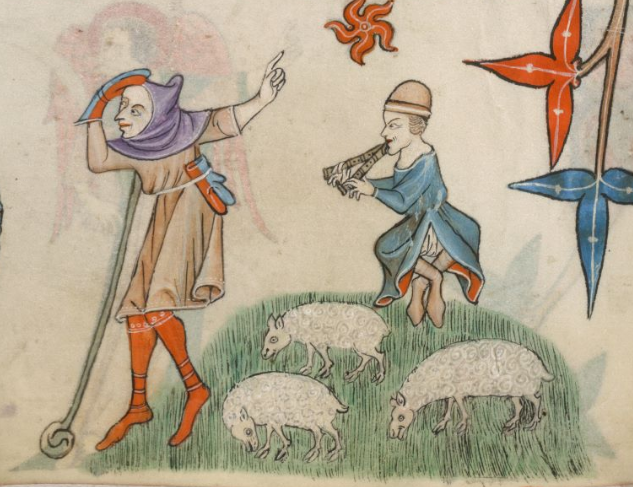
For a male impression, two groups of archaeological finds provide particularly useful starting points and have been used by reenactors for many years: the garments of the Bocksten Man and the finds from Herjolfsnes in Greenland.
Let us focus on the first.
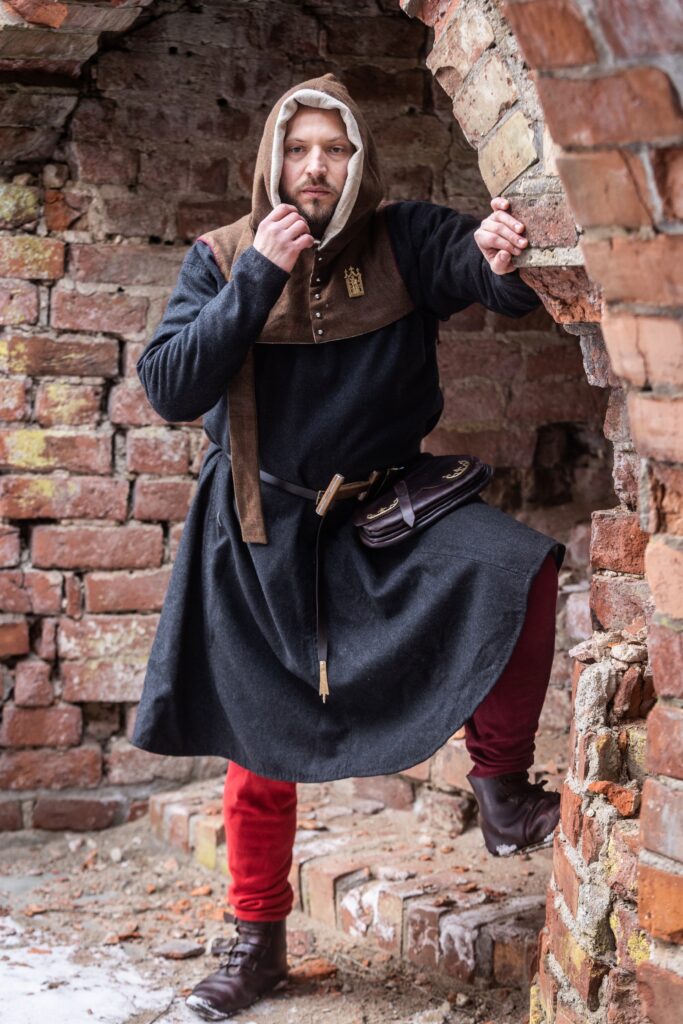
The Bocksten Man is one of the best-known medieval clothing finds. His surviving garments provide an exceptionally valuable reference point for reconstructing 14th-century male clothing. Their construction is relatively straightforward, the clothing is practical, and — most importantly — we have an actual surviving garment on which to base our reconstruction. You do not immediately have to tackle the complicated construction of the fashionable, closely fitted clothing of the late 14th or early 15th century. There is no single accepted interpretation of the social status of the man whose body was found in the Bocksten bog. However, analysis of the cut and fabrics suggests that he may have belonged to the middle ranks of medieval society. He may have been a servant in a wealthy household, an official or a craftsman. His clothing was not worn out and was not noticeably old-fashioned, but it was certainly not the clothing of the highest social elite.
What About a Women’s Outfit?
For a female impression, things are slightly more complicated.
We do not have a direct equivalent of the Bocksten Man whose complete clothing can simply serve as the starting point for an entire outfit.
What we do have, however, is Herjolfsnes — an exceptionally rich collection of surviving medieval garments from Greenland. Among them are long, gored garments that are extremely useful when reconstructing female clothing of the 14th and early 15th centuries. You can find garments inspired by these finds in our shop as well. We will gladly return to Herjolfsnes in more detail in another article.
For a beginner’s female impression, a good starting point is a woollen cotte simple — a straightforward, long gown with a fitted upper body and a skirt widened with gores.
This is one of those garments that works particularly well when you are just starting out.
Within the context of the later Middle Ages, it is relatively versatile, provides a solid foundation for developing your impression further and can be combined with additional layers, suitable headwear, a belt or a cloak.
It is worth remembering, however, that “cotte simple” is a modern classification used by reenactors rather than the medieval name of one specific, standardised type of dress.
Reenactors generally use the term to describe a relatively simple gown with uncomplicated construction, without an elaborate fastening system or highly decorative details.
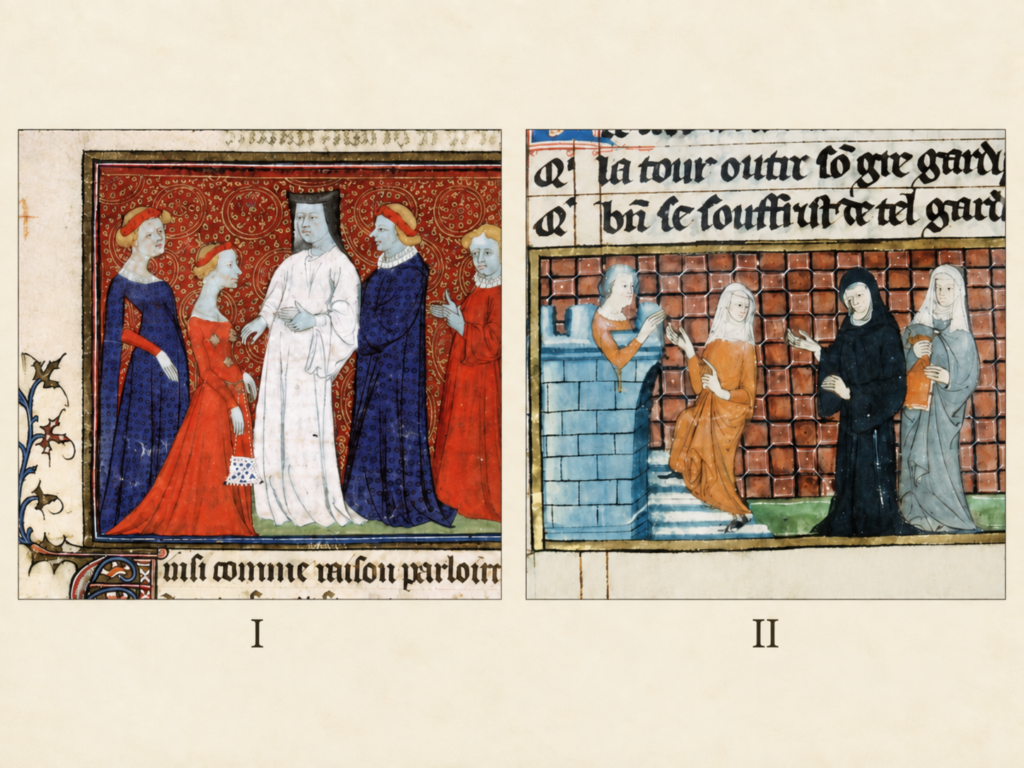
France, c. 1380–1390 | Bohemia, c. 1390
Despite regional and stylistic differences, late 14th-century iconography regularly depicts women wearing long gowns fitted through the upper body and widening towards the hem.
And that is precisely why this type of gown works so well as a first dress.
It is not a costume for a single occasion.
A well-made cotte simple can later become the basic layer of a much more developed impression. You can add a cloak, a surcoat, a houppelande, or accessories more characteristic of a particular period instead of having to rebuild your wardrobe from scratch every time.
When choosing a particular cut, however, our basic rule still applies: time, place and social status.
Do not begin by portraying a wealthy character if you do not have the budget required for the appropriate clothing and accessories. Build a good foundation first.
Choose a medieval gown whose cut, proportions and fabric make sense for the person you are trying to reconstruct.
Headwear – A Small Detail That Makes a Big Difference
You already have your underwear, hose and the basic outer layer of your outfit. Now it is time for something beginners often treat as optional: headwear.
And that is unfortunate, because the right headwear can completely change the way your entire impression looks.
The same medieval gown or tunic worn with a random cap will create a very different impression from one combined with headwear appropriate to a particular time and place.
In late medieval iconography, the head is very rarely left “neutral”. Hairstyles, veils, kerchiefs, hoods and hats are integral parts of the overall appearance.
Medieval headwear for Women
For a female impression, simple linen headwear is an excellent place to start: kerchiefs, veils, linen caps and various combinations of these.
Depending on the period, region and social status, they could be arranged and worn in many different ways.
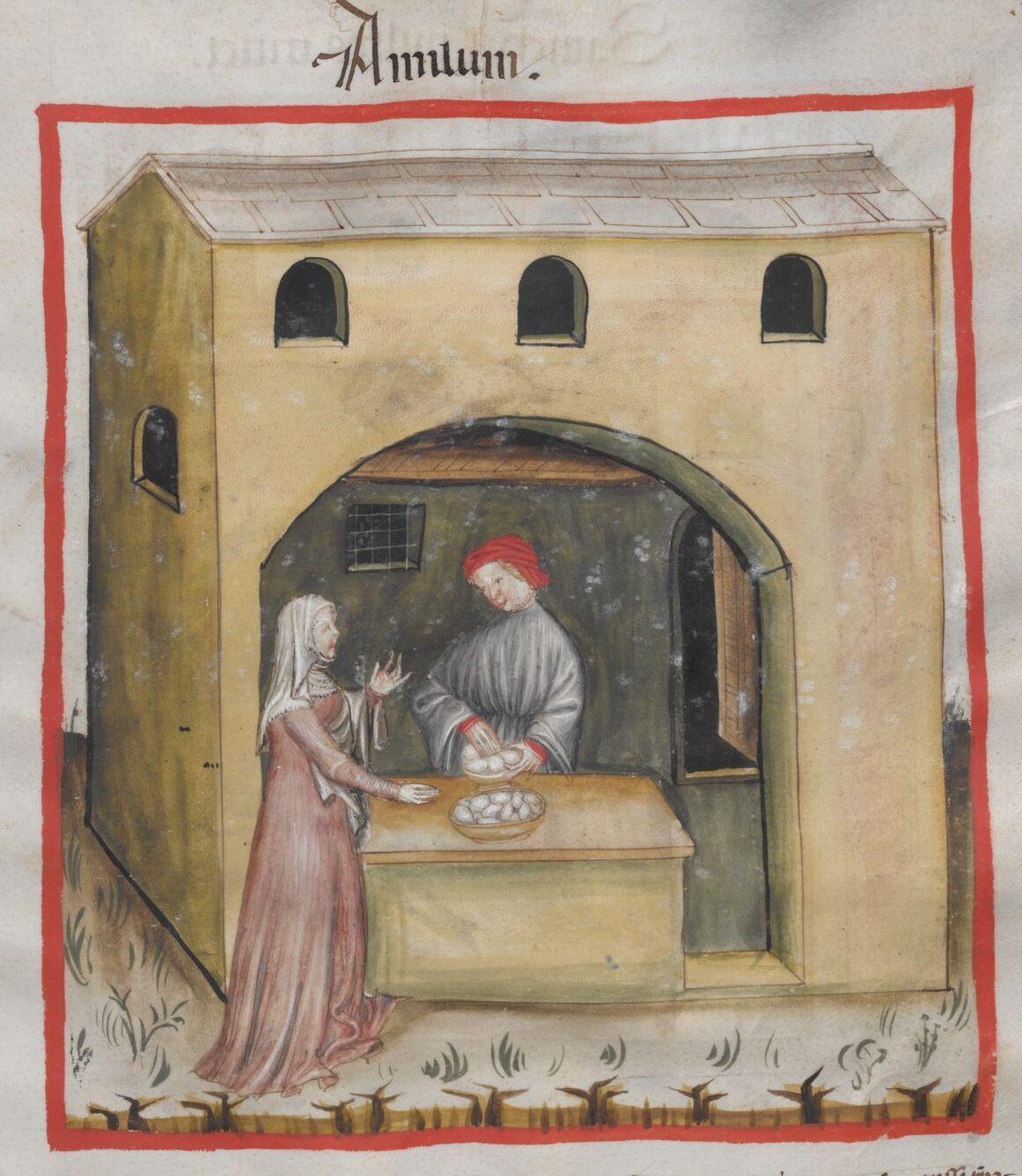
A kerchief or veil can also be combined with a small open hood or a buttoned hood.
On cold or rainy days, you will quickly appreciate just how practical such a combination can be.
Medieval headwear ror Men
A male impression also rarely ends with the tunic alone.
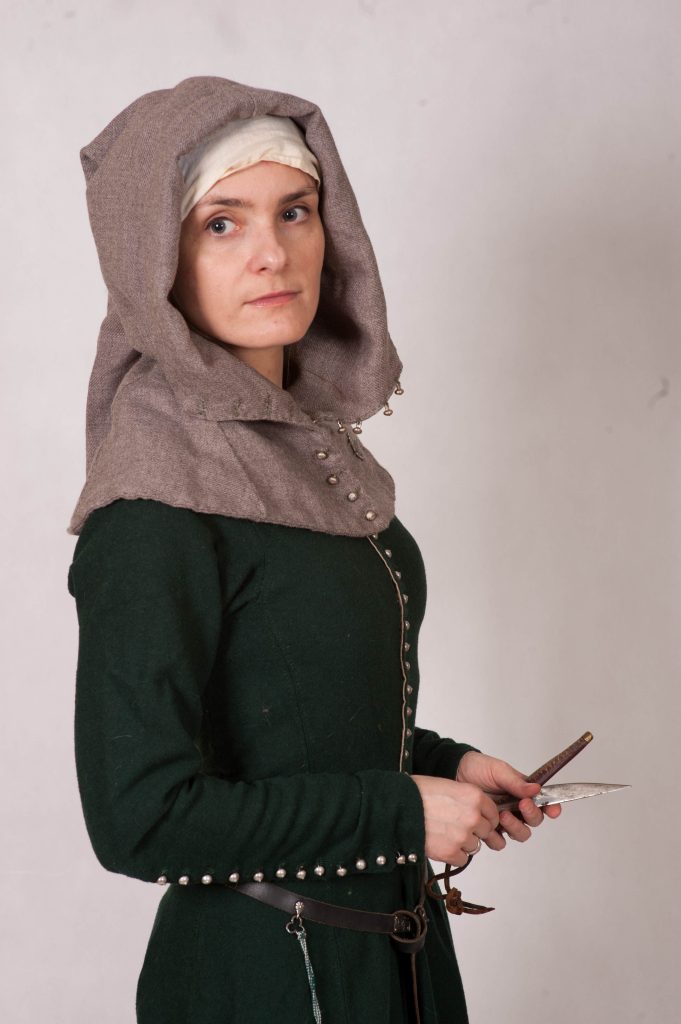
One of the most practical choices is a hood.
It provides protection from cold, wind and rain while also being one of the most characteristic elements of the medieval wardrobe.
Depending on the period, a hood may be short or longer, feature a long liripipe, be worn conventionally over the head or arranged in more decorative ways.
There are also numerous types of caps and other textile headwear, which should be selected according to the specific impression you are building.
Don’t Treat Headwear as Decoration
TThis may be the most important point.
Headwear is not something you add at the very end simply to make an outfit “look more medieval”.
It is just as much a part of the clothing as the tunic, gown or hose.
If you are building a relatively simple impression of a townsman or townswoman from the late 14th or early 15th century, a properly chosen kerchief, hood or cap will do far more for the credibility of your outfit than a random pouch, piece of jewellery or additional decorative accessory.k.
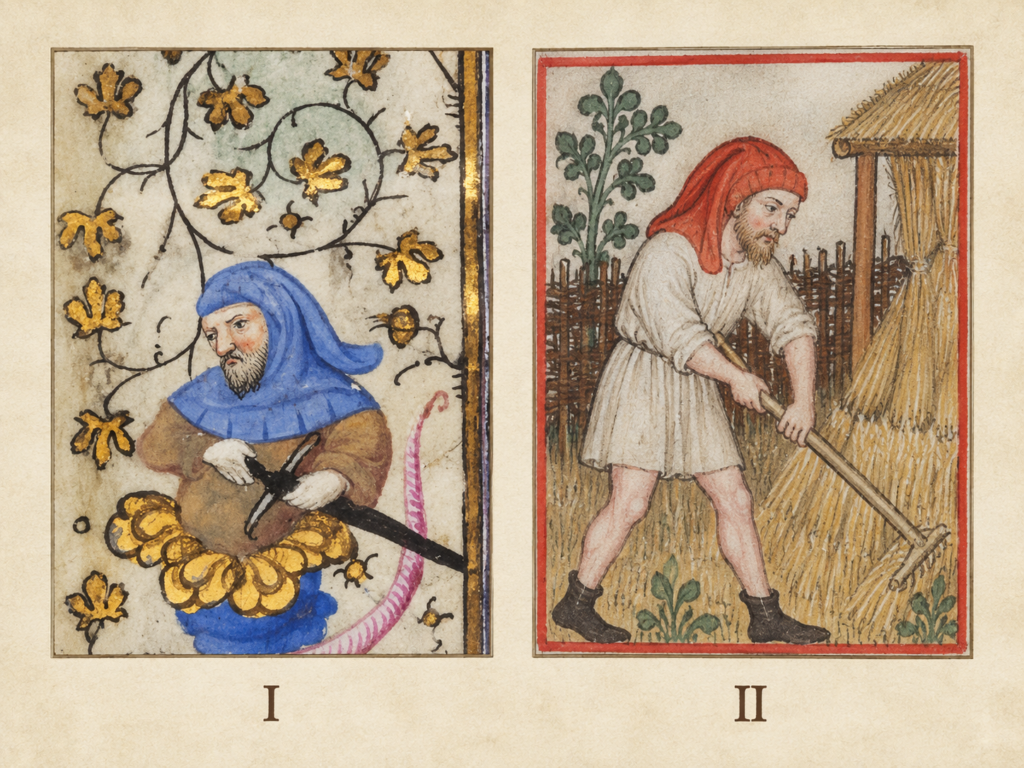
France, c. 1418 | Italy, late 15th century
Finally: You Don’t Need Everything at Once
If, after reading all this, you feel that historical reenactment requires an enormous amount of knowledge, a dozen books and an entire wardrobe full of clothing — don’t worry. You do not need to build the perfect impression before your first event.
At the beginning, a few informed decisions are enough.
Work out roughly when, where and whom you want to portray, and then build your outfit gradually: start with underwear, add the basic clothing layer, hose or stockings, suitable headwear and, eventually, further elements of the wardrobe.
Whenever possible, choose items that are well supported by historical sources.
Surviving garments such as those from Bocksten or Herjolfsnes can provide an excellent starting point, but do not forget iconography. Images can show us how individual garments worked together and what a complete medieval appearance might have looked like.
Do not be afraid of simple solutions.
A well-made linen shirt, pair of braies, simple tunic or cotte simple will remain useful for far longer than a spectacular garment bought simply because it “looks medieval”.
You will probably never reach the point where you can finally say:
“That’s it. My kit is complete. I don’t need anything else.”
That is simply how historical reenactment works.
There is always another cloak, a second pair of hose, a more appropriate hat — or a newly discovered source that suddenly turns everything you thought you knew upside down.
And perhaps that is exactly why it is so easy to get hooked.
If you are still unsure where to begin when putting together your first medieval impression, get in touch with us.
You do not need to know the names of every garment or arrive with a finished design.
Just tell us what period you are interested in and what kind of person you would like to portray, and we will help you choose a sensible place to start.