Historical Costumes – Bonumsartores.com
The Doublet – Men’s Costume of the Late Middle Ages
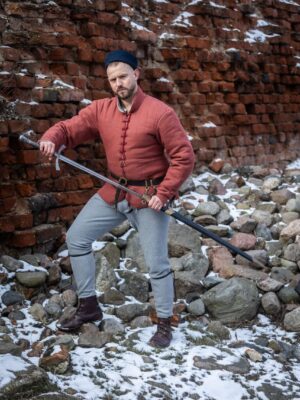
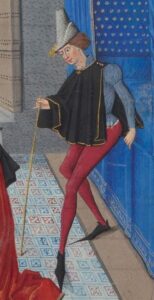
The doublet is a fitted caftan that became a staple of men’s attire in Europe in the 14th and 15th centuries.
In the 14th century, the doublet emerged as a shorter, more fitted layer worn under or instead of loose-fitting surcoats and cottehardie. Initially simple and practical, it gradually acquired a construction consisting of multiple pieces of fabric fitted together by seams, often with light padding (quilting) for insulation and silhouette shaping. In the 15th century, with the development of cut and tailoring, doublets became more elaborate—with deep armholes, decorative sleeves (which could be attached separately), and a pronounced waistline; among the nobility and bourgeoisie, we see richer fabrics and decorations.
The doublet is characterized by a close-fitting cut, reaching to the waist or hips, and fastened at the front with buttons, hooks, or straps. It was made of linen, wool, leather, and, in more affluent versions, silk. It was often quilted or lightly stuffed, which improved insulation and gave it shape. In the 15th century, doublets began to be sewn from several fitted pieces, with decorative stitching and detachable sleeves, making them an exceptionally elegant piece of clothing.
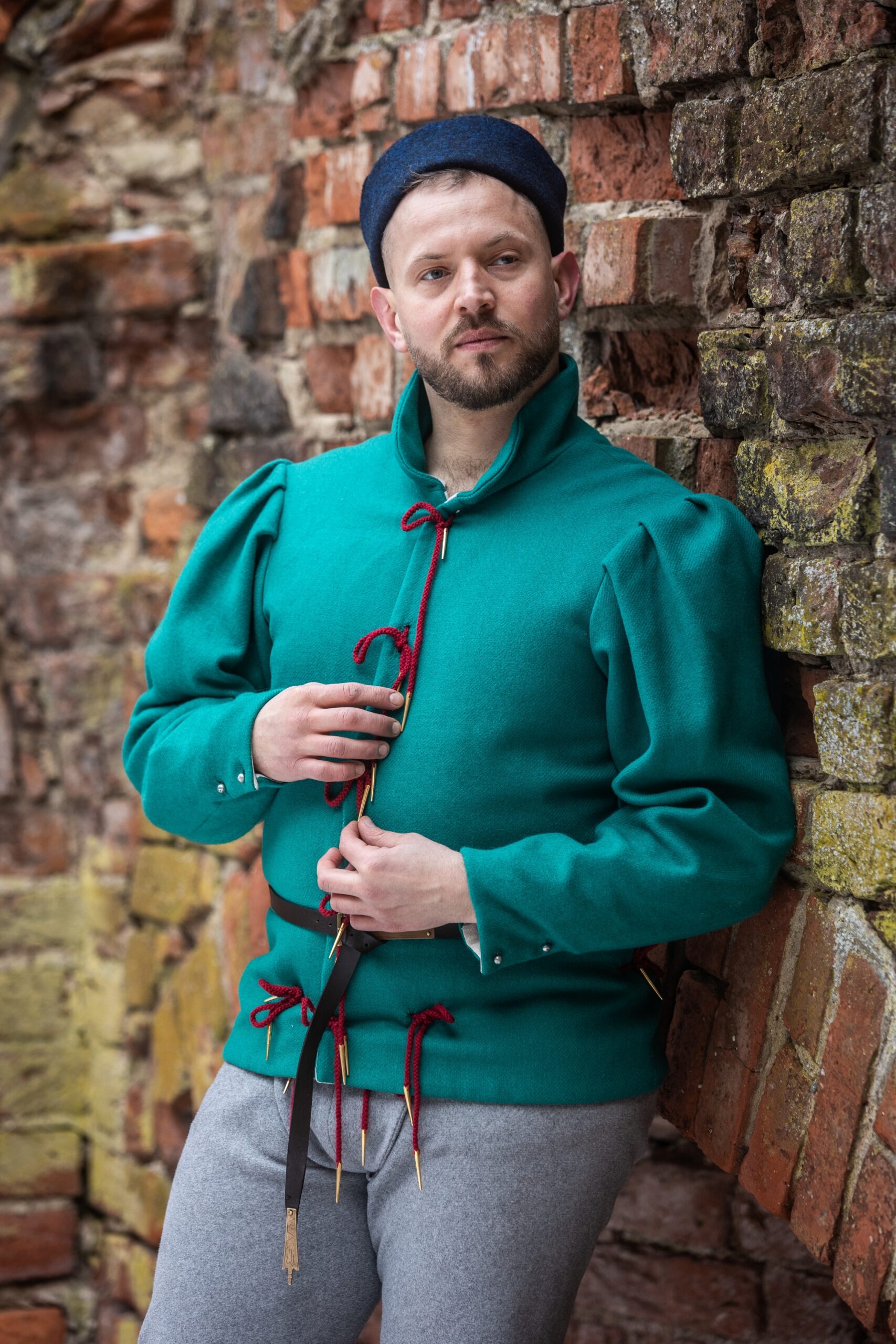
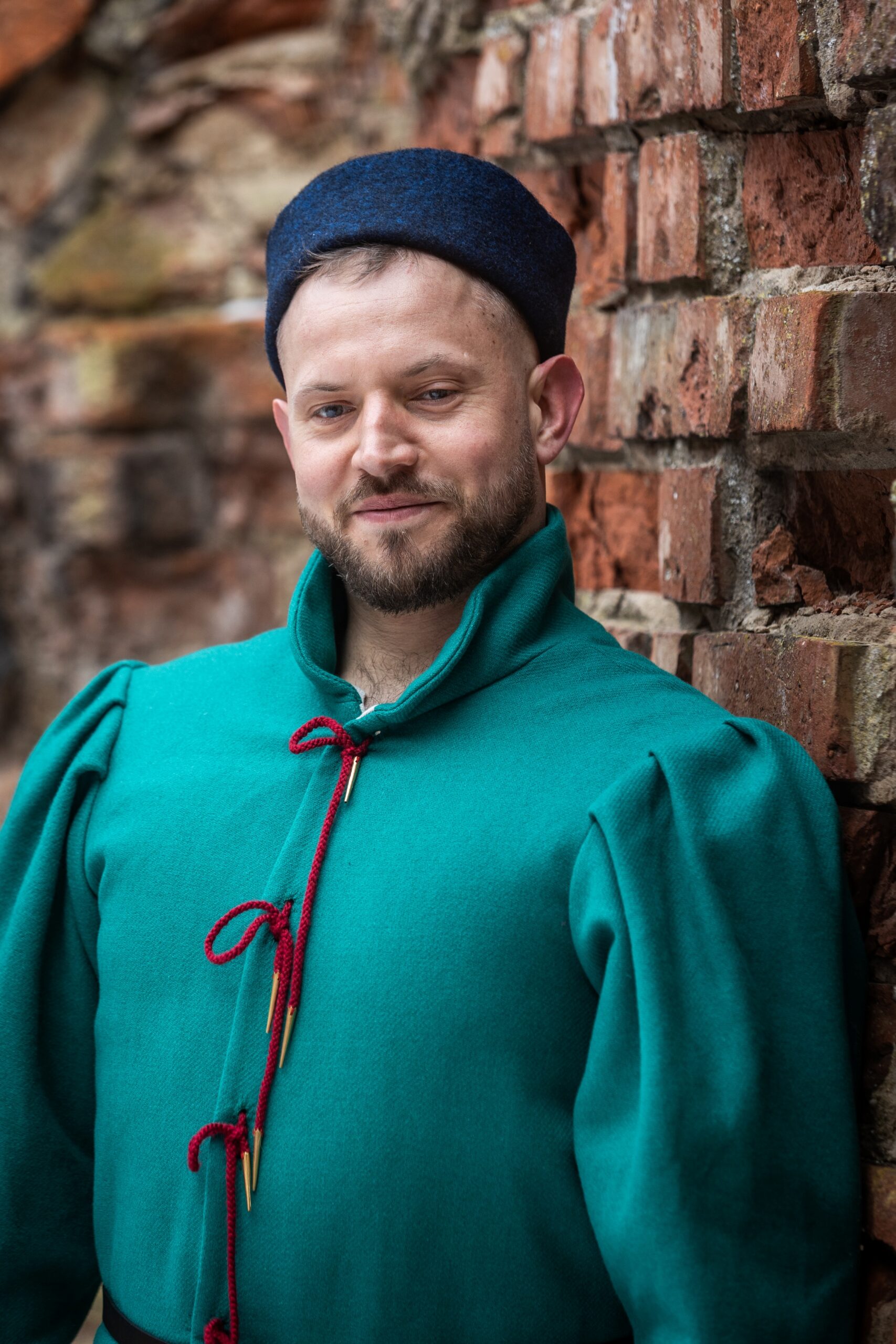
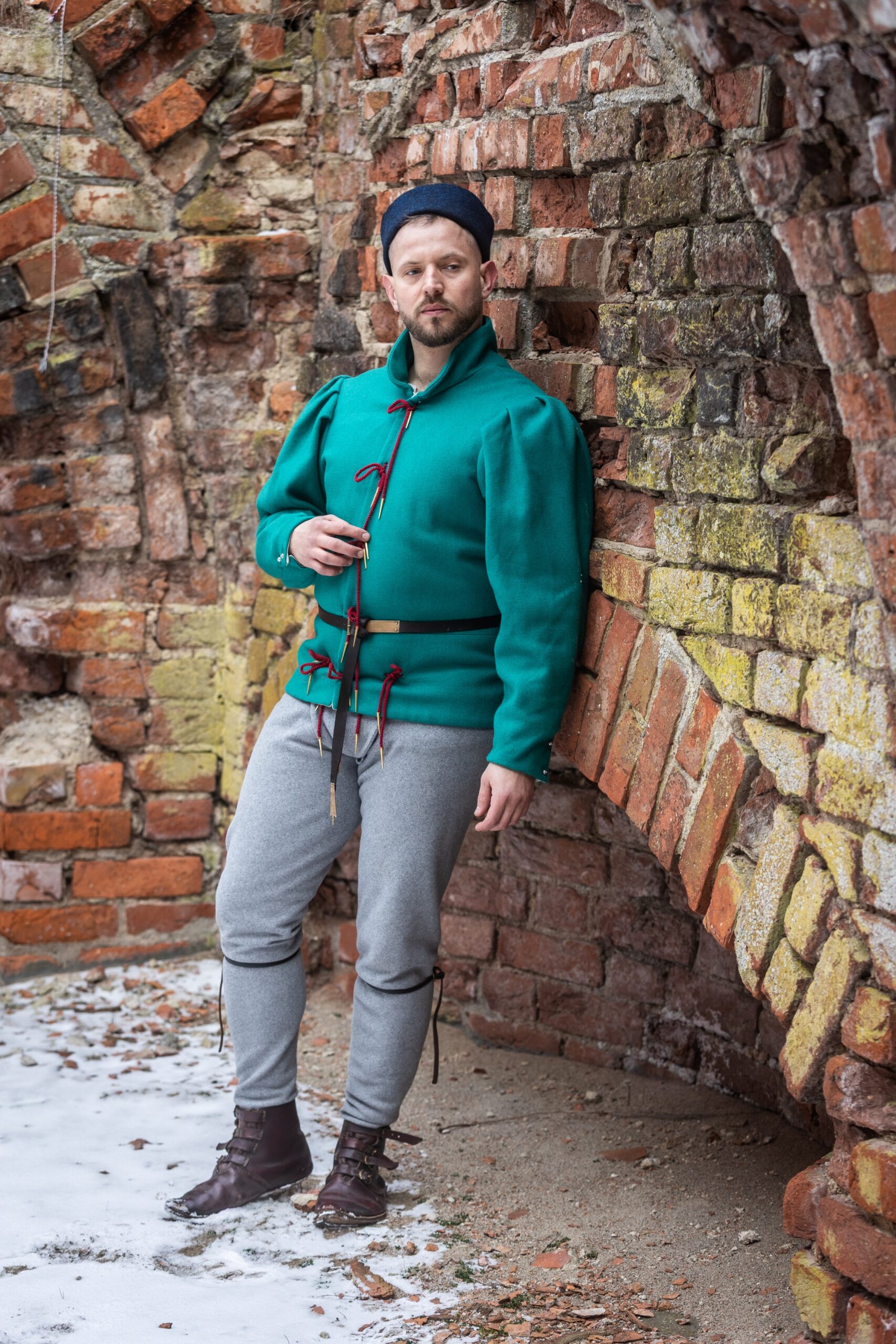
The puffed-sleeved doublet has been an elegant and functional element of men’s wardrobe since the second half of the 15th century. It was worn as an outer layer or under armor, providing both comfort and an appropriate appearance in line with the fashions of the period. The characteristic puffed sleeves gave it a refined appearance while also allowing for freedom of movement. It is frequently featured in iconography from the period.
The traditional lacing with metal aglets (tips) allows for a tight fit, ensuring comfort and a snug fit. This fastening also facilitates quick donning and doffing of the doublet, which was important both for everyday wear and on the battlefield or during ceremonial occasions.
Today, the doublet is an indispensable part of historical reenactments, performances, and medieval events. Our reenactments are based on iconographic sources and archaeological finds, using natural fabrics such as linen, wool, and silk. Each late medieval wool doublet is custom-made, allowing us to customize the size, color, and additional embellishments according to the customer’s preferences. This allows each piece to be a unique reflection of the historical design and the owner’s individual style.
Keywords: doublet, medieval costume, historical reenactment, men’s clothing, 14th-century fashion, quilted caftan, historical clothing.
Related products
-

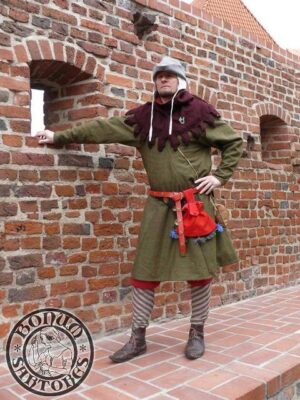
Herjolfsnes Tunic 43
151,28 € This product has multiple variants. The options may be chosen on the product page -
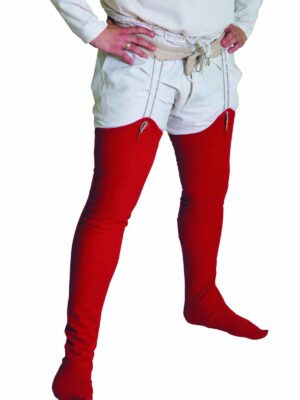
Hose 13th century
Price range: 87,53 € through 99,05 € This product has multiple variants. The options may be chosen on the product page -
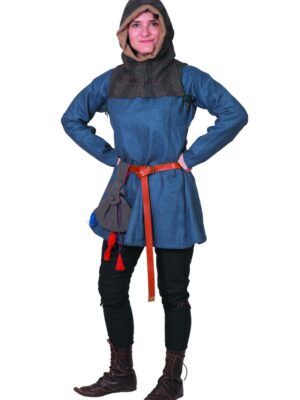
Woolen Cotte Tunic Unlined
145,11 € This product has multiple variants. The options may be chosen on the product page -
Joined-hose – medieval trousers
149,72 € This product has multiple variants. The options may be chosen on the product page