Historical Costumes – Bonumsartores.com
Medieval Dresses – The History and Beauty of the Middle Ages
A medieval dress was not merely a piece of clothing, but also an important part of the social and cultural identity of its wearer. From simple, practical garments worn by urban women and peasants to richly decorated courtly attire, medieval dresses could reflect social status, wealth, and position within society.
The Early Middle Ages were characterised by relatively simple, loose-fitting garments, often made of linen or wool. As tailoring techniques developed, particularly from the later Middle Ages onward, women’s garments increasingly featured more fitted cuts that followed the shape of the body. Long sleeves, gussets used to widen the skirt, and decorative details at the neckline and cuffs became increasingly common in various forms of dress.
At royal and princely courts, wealthy women could wear garments made from luxurious materials such as silk and richly woven fabrics, sometimes decorated with embroidery, fur, precious metal threads, or other costly details. Such clothing could serve not only as practical attire but also as a visible expression of wealth and social prestige. In the Late Middle Ages, fashionable garments could also feature decorative slits and contrasting linings, as well as elaborate embroidery and other forms of ornamentation.
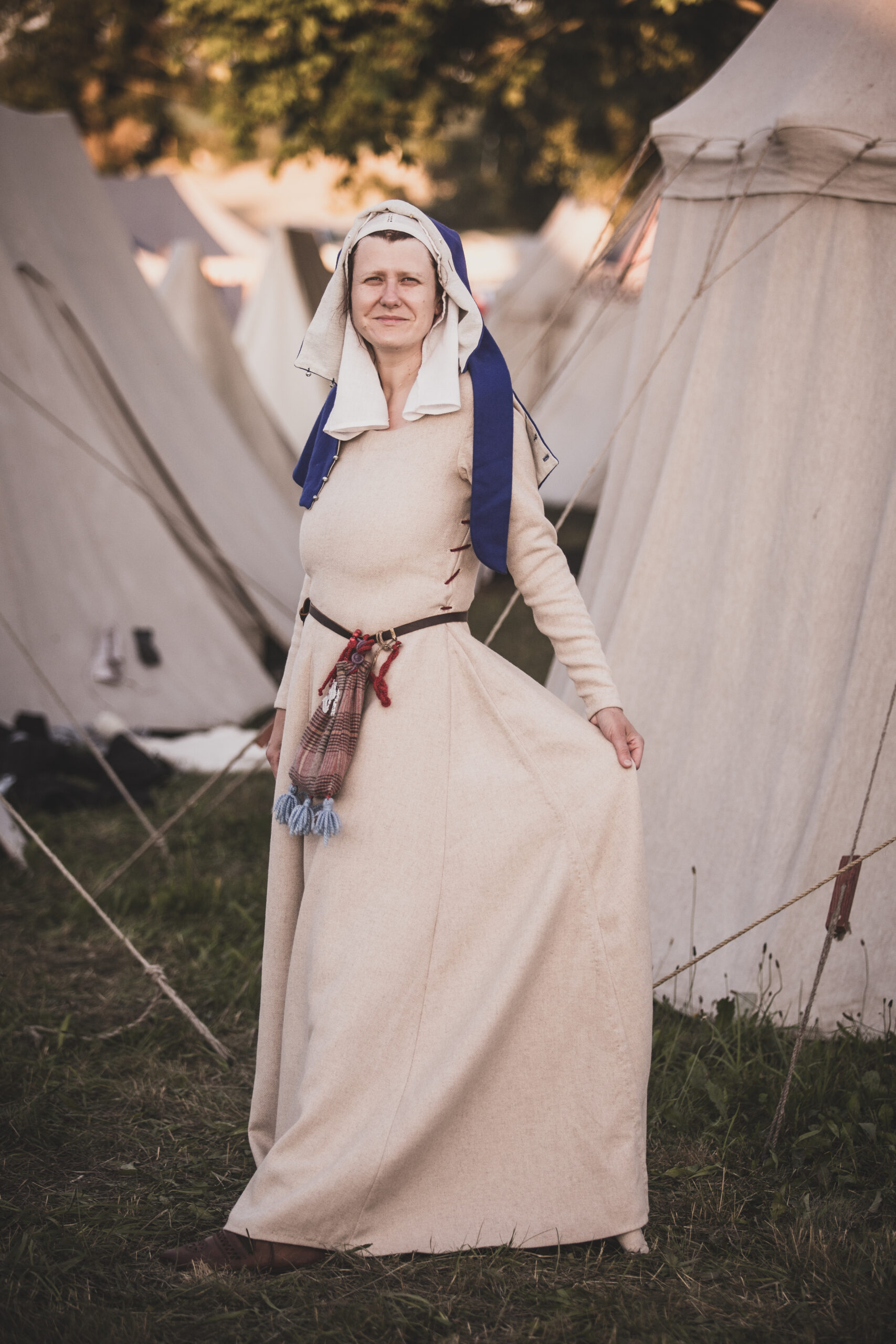
One type of medieval dress was the cotte simple – a simple, long garment that could feature wide sleeves and was suitable for everyday wear. Depending on the period and region, dresses of this general type could be worn on their own or combined with additional layers, such as a surcoat or a cloak.
Today, medieval dresses are popular among historical reenactors, at medieval festivals, and with people interested in experiencing the atmosphere of the Middle Ages. These garments combine historical research, craftsmanship, and traditional tailoring techniques, bringing the forms and details of medieval clothing to life.
Medieval gowns from the 13th, 14th, and 15th centuries—tailor-made for reenactors and history enthusiasts. Our gowns are created based on iconography, extant historical garments, and historical sources. Each model is attributed to a specific period, and the garments are sewn to individual measurements.

Related products
-
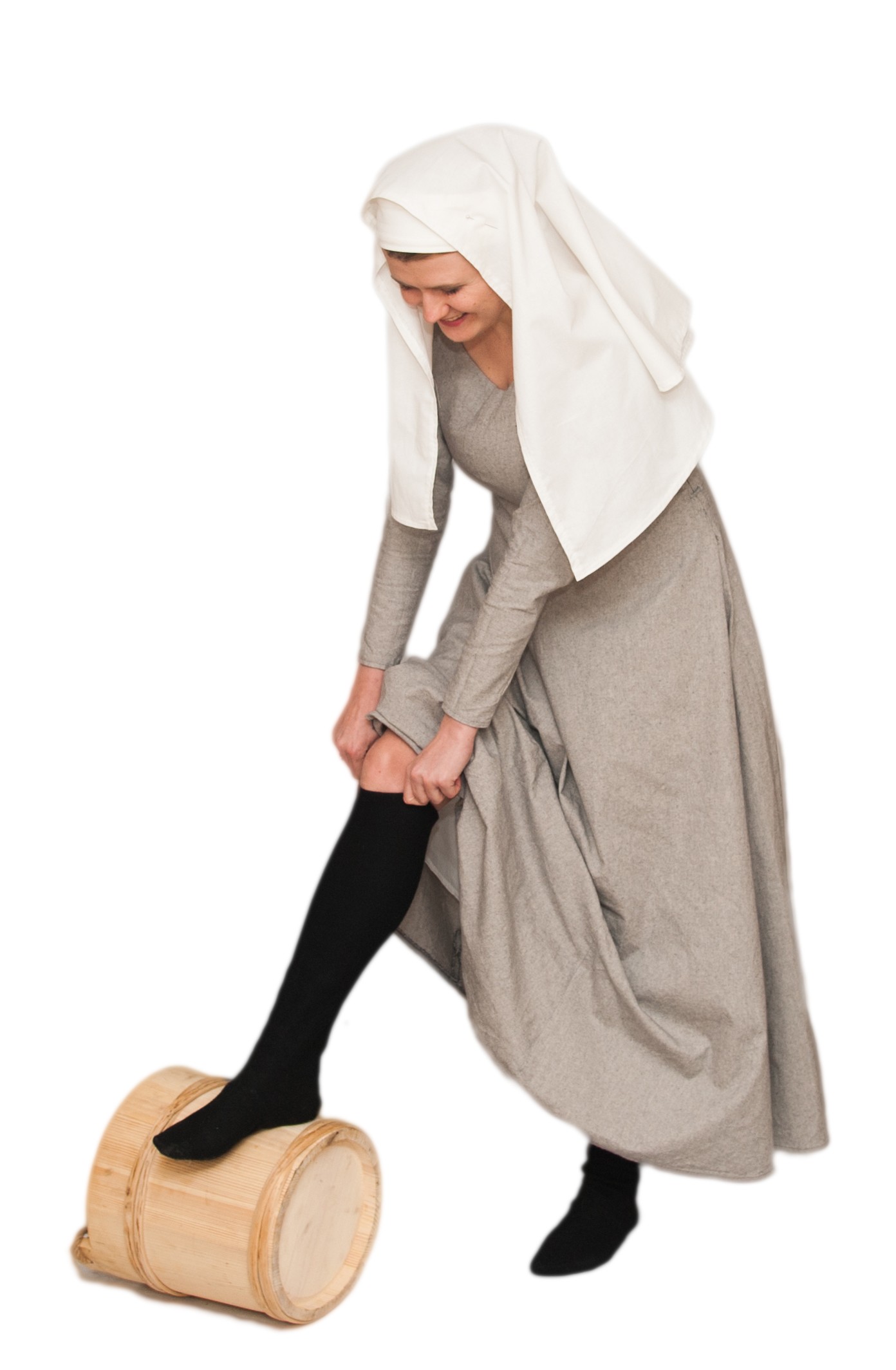
Medieval Women Hose
57,05 € This product has multiple variants. The options may be chosen on the product page -
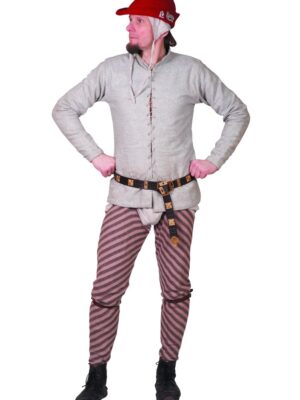
Woolen Medieval Doublet – Late 14th to Early 15th Century
171,32 € This product has multiple variants. The options may be chosen on the product page -
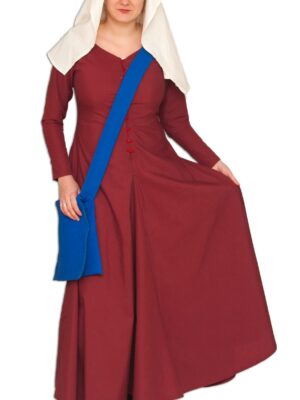
Cotte simple linen type 1 simple medieval dress
Price range: 189,21 € through 200,60 € This product has multiple variants. The options may be chosen on the product page -

Woolen Cotte Tunic Unlined
201,02 € This product has multiple variants. The options may be chosen on the product page