Historical Costumes – Bonumsartores.com
Medieval Dresses – The History and Beauty of Ancient Times
A medieval dress is not just a piece of clothing, but also a symbol of an era in which every detail of the garment carried its own significance. From simple, practical cuts worn by townswomen and peasants to richly decorated courtiers’ attire, medieval dresses reflected social status, wealth, and position in the hierarchy.
The Early Middle Ages were characterized by rather simple, loose-fitting garments, often made of linen or wool, ensuring comfort and functionality. Over time, especially from the 14th century onward, dresses began to take on more fitted forms, accentuating the figure. Long sleeves, gussets widening the hem, and embellishments at the neckline and cuffs became popular.
In royal and princely courts, medieval dresses were made of silk, brocade, or velvet, embellished with gold thread, fur, and precious stones. They were not only a form of clothing but also a display of wealth and prestige. The late Middle Ages also saw the emergence of fashionable slits, contrasting linings, and rich embroidery, which gave the garments a unique character.
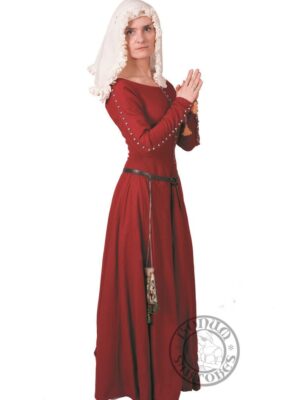
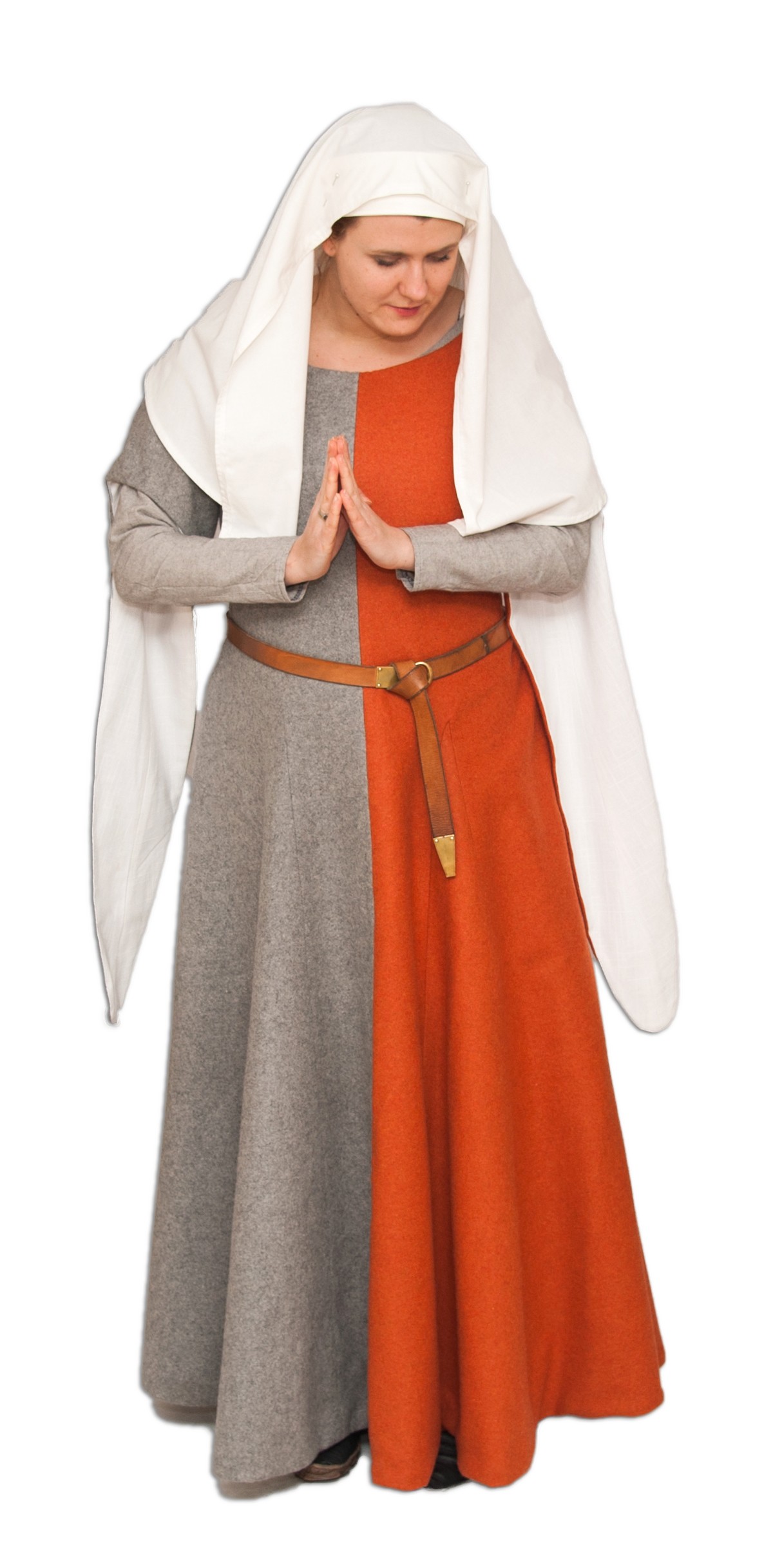
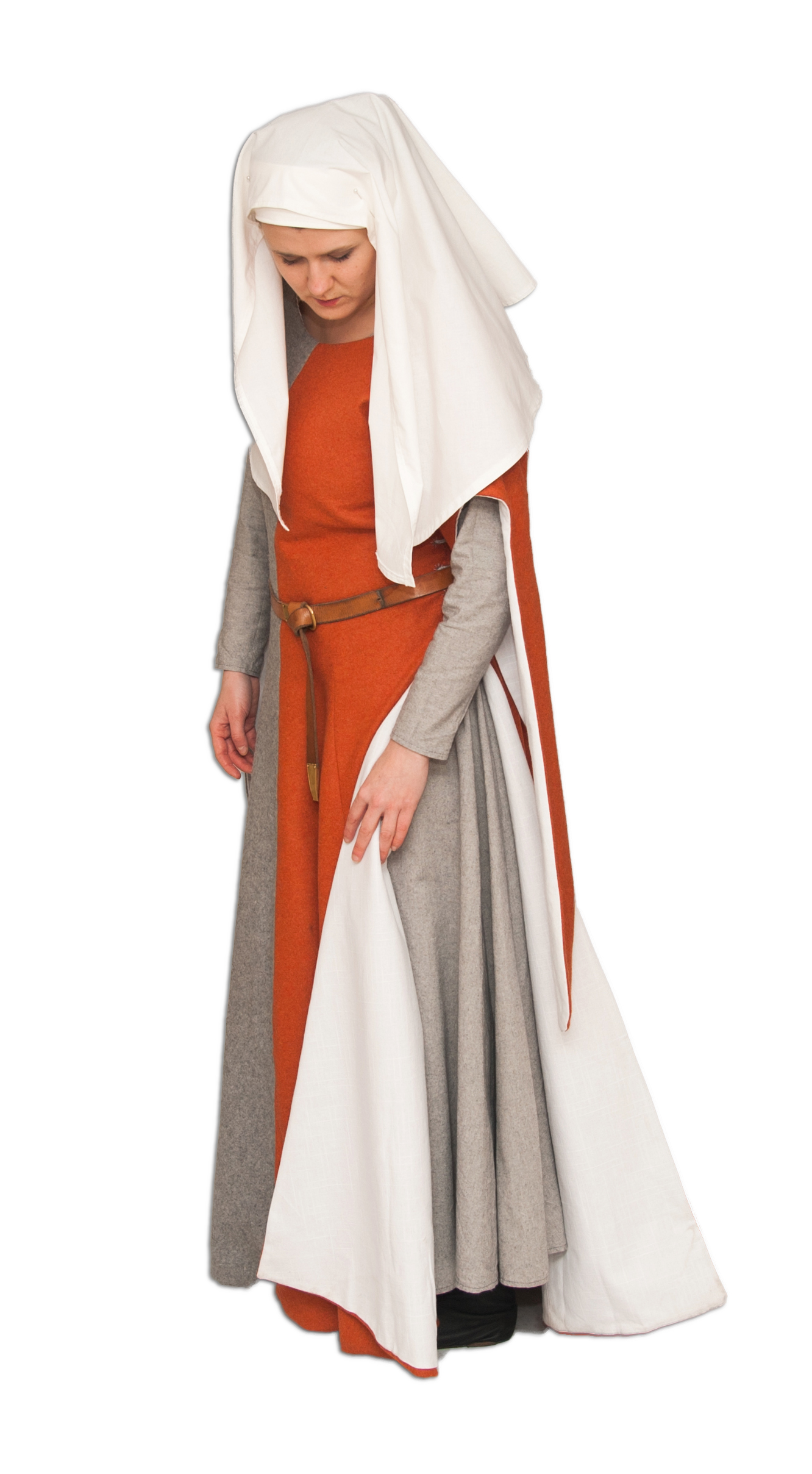
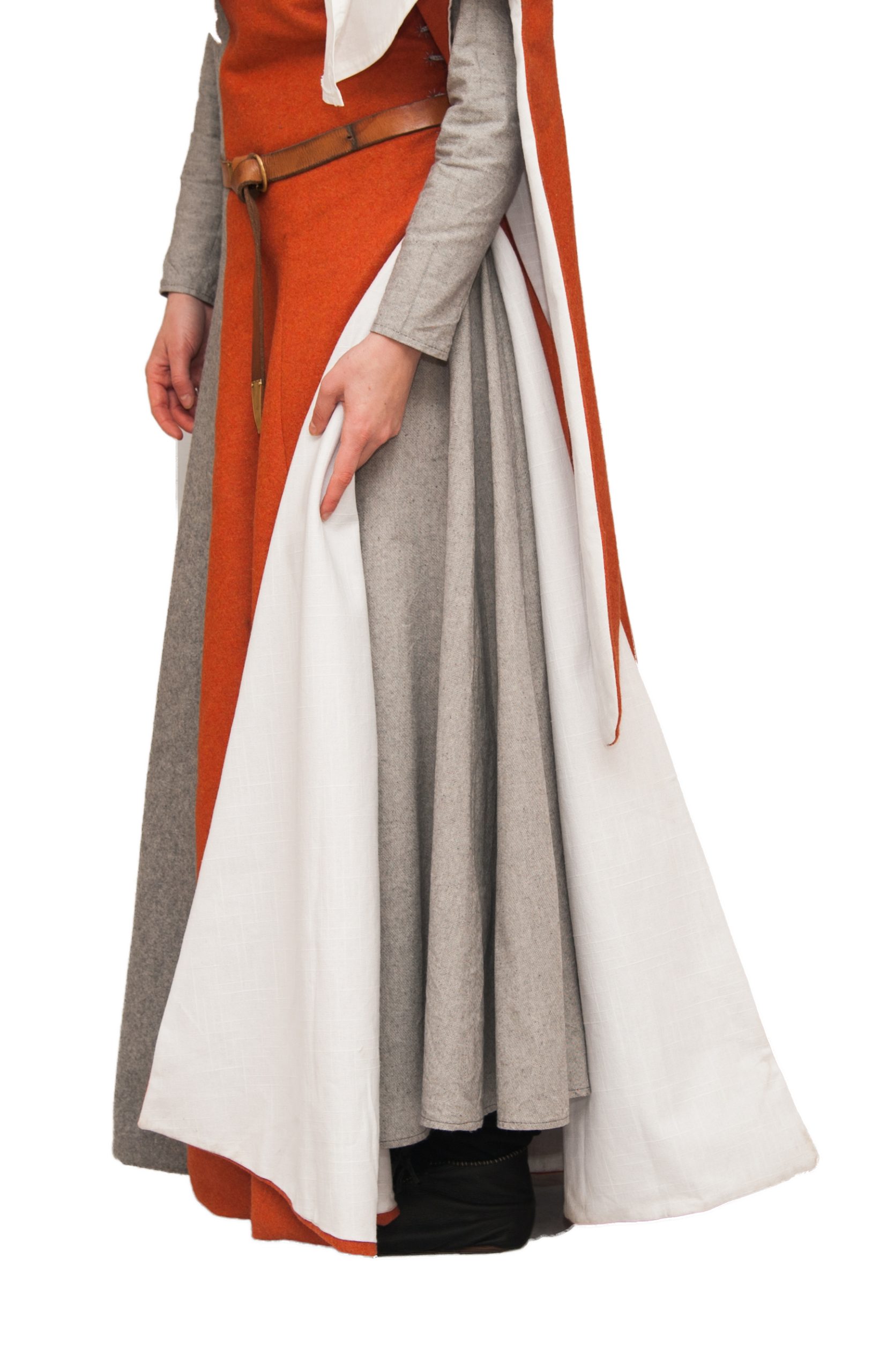
The medieval dress presented here was popular in the 14th and 15th centuries, especially among ladies-in-waiting. It was characterized by a fitted bodice and a flared skirt, achieved by inset triangular gussets. This cut perfectly accentuated the figure, making it one of the most elegant creations in medieval fashion.
The dress was distinguished by short sleeves that fell loosely from the elbow, creating a tippet-like shape.
This type of medieval dress was made of high-quality materials such as wool, silk, or velvet, often lined with natural linen for greater comfort.
Today, medieval dresses are popular in historical reenactments, at festivals, and among those seeking to relive the atmosphere of bygone times. These are outfits that combine history, elegance and tailoring craftsmanship based on ancient traditions.

Related products
-

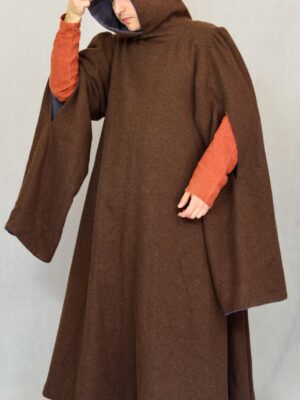
Traveling Surcoat
325,43 € This product has multiple variants. The options may be chosen on the product page -
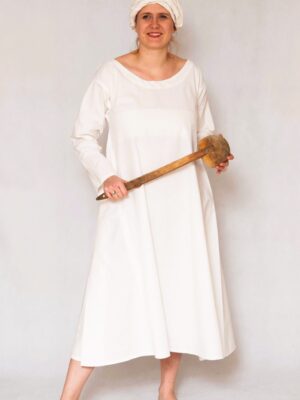
Long sleeve shirt (chemise)
67,89 € This product has multiple variants. The options may be chosen on the product page -
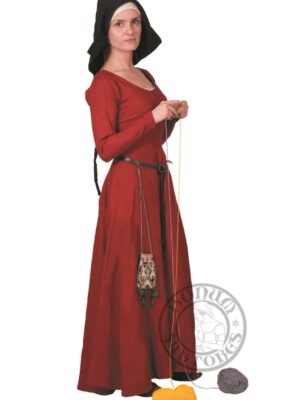
Cotte simple wool type 1
Price range: 222,39 € through 227,08 € This product has multiple variants. The options may be chosen on the product page -
Cottehardie type 2
Price range: 330,46 € through 460,28 € This product has multiple variants. The options may be chosen on the product page