Historical Costumes – Bonumsartores.com
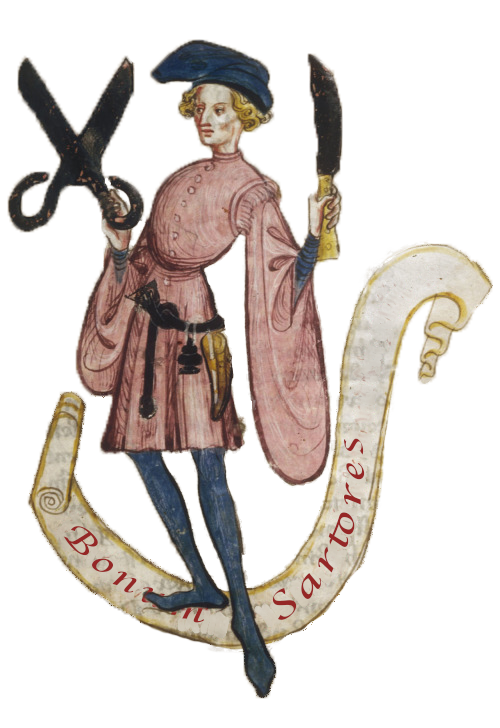
Men’s Clothing in the Middle Ages – A Brief History
Men’s clothing in the Middle Ages changed with the times, but for centuries its foundation remained the tunic – a universal item worn by both peasants and knights.
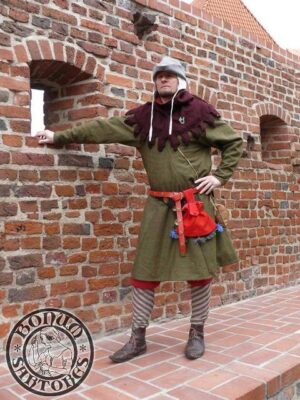
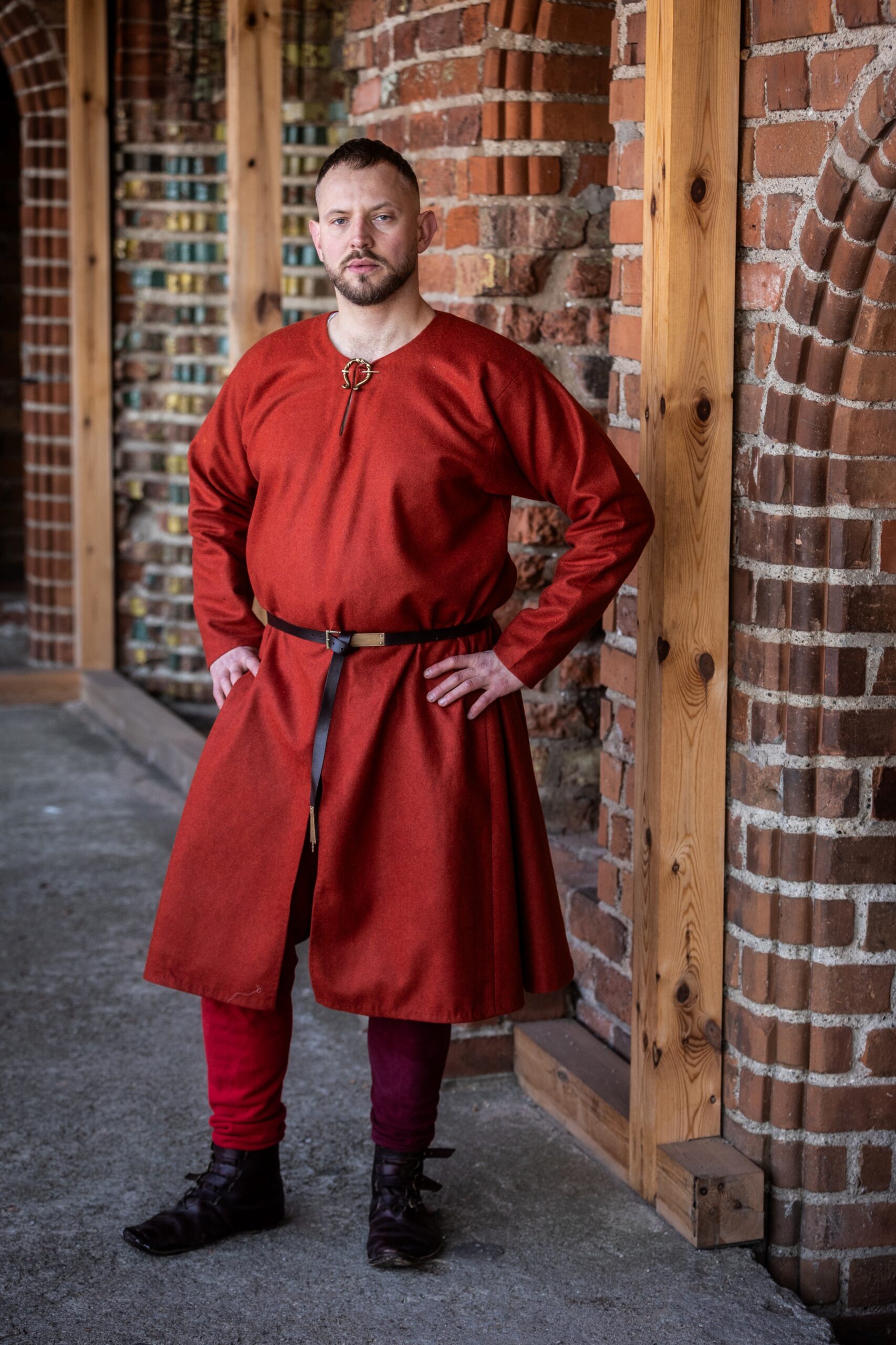
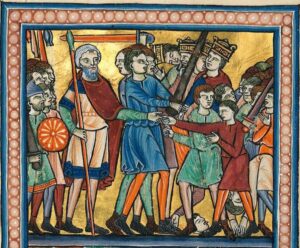
In the early Middle Ages, the tunic was simple, loose, and reached to the knees or calves. Made of linen or wool, tied with a belt, it constituted the everyday attire of most men. On colder days, a second, thicker tunic was worn, along with a cloak fastened with a brooch.
In the 12th and 13th centuries, more fitted styles emerged, with gussets and set-in sleeves that allowed for freedom of movement while also accentuating the figure. Wealthier men adorned their tunics with embroidery and trim.
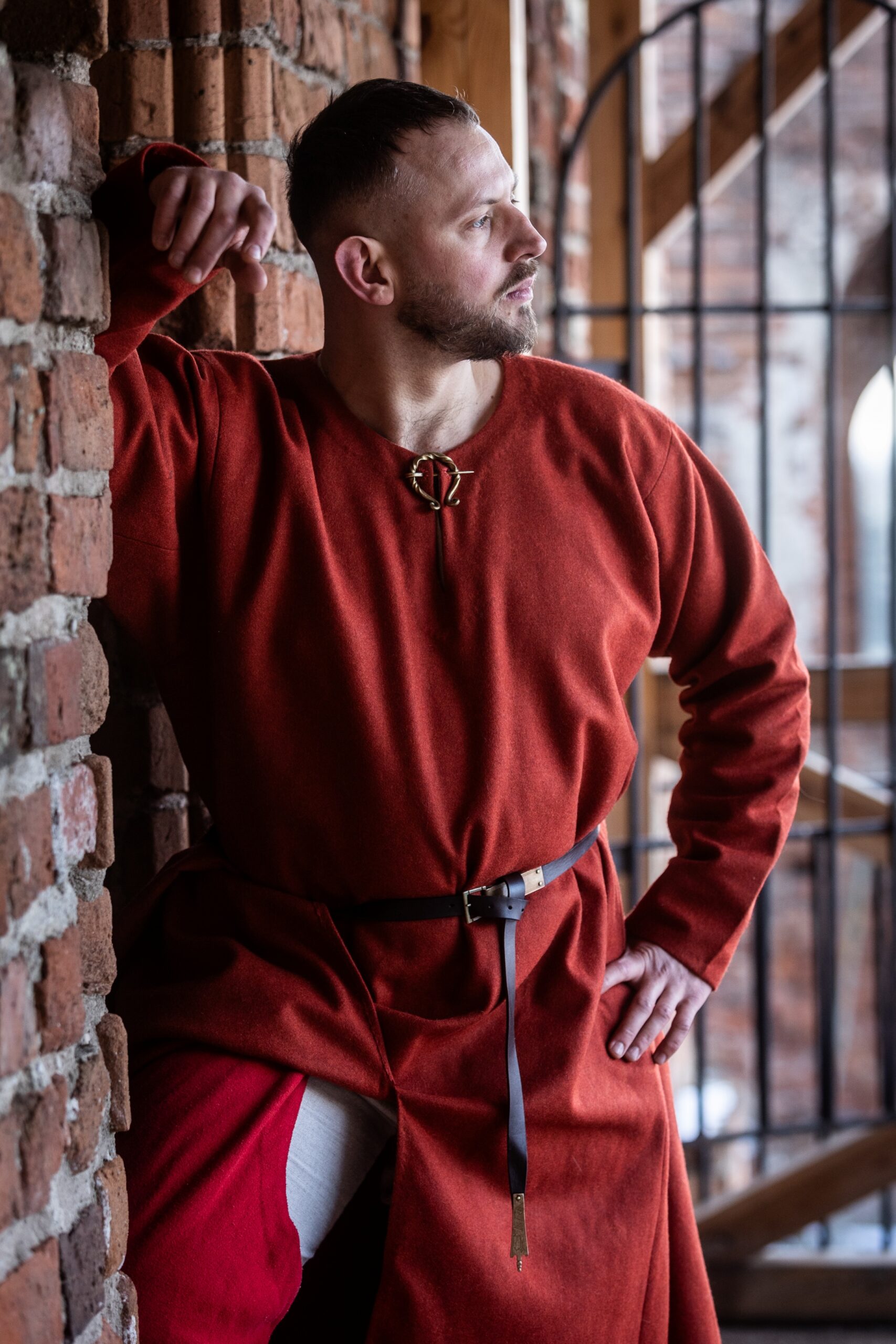
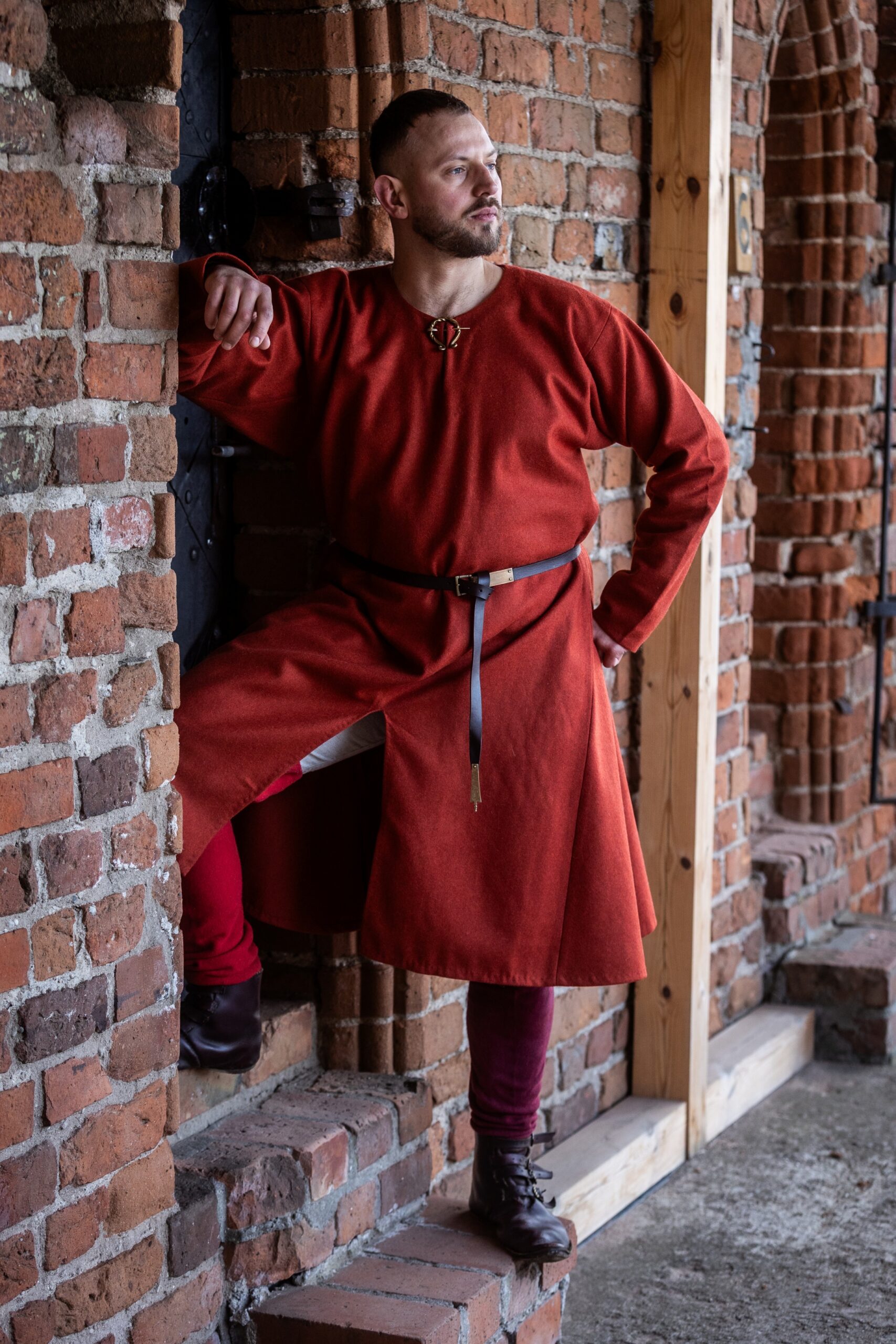
In the 13th century, the tunic was a staple garment for both men and women. It was a long, simple robe with sleeves, sewn from several strips of fabric and flared with gussets at the sides, allowing for freedom of movement. It was most often made of linen or wool, depending on status and the season.
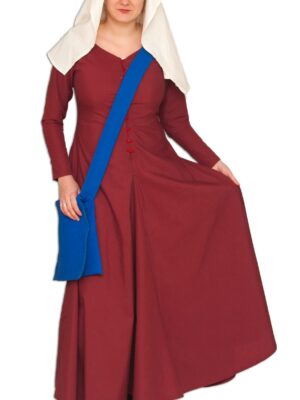
Men’s tunics reached to the knee or mid-thigh and were worn with a belt, while women’s were longer – down to the ankles – and often fitted at the waist. In the upper classes, they were adorned with piping, silk trim, or contrasting lining.
The Medieval Tunic Today
In historical reenactment, the tunic is a fundamental element of clothing – comfortable, aesthetically pleasing, and faithful to ancient patterns. In our workshop, we sew tunics from natural fabrics: linen and wool, based on archaeological and iconographic sources. Each one captures the atmosphere of the period and is perfect for both everyday historical styling and reenactment events.
Related products
-

Linen Cap type 1
Price range: 5,82 € through 13,97 € This product has multiple variants. The options may be chosen on the product page -
Herjolfsnes Tunic 43
151,09 € This product has multiple variants. The options may be chosen on the product page -
Cotte simple linen type 1
Price range: 135,37 € through 147,04 € This product has multiple variants. The options may be chosen on the product page -
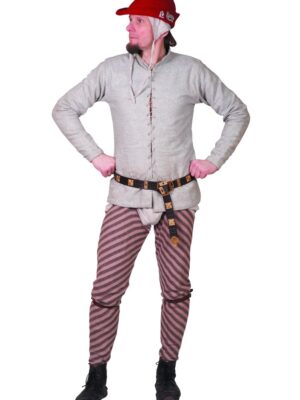
Woolen doublet
177,03 € This product has multiple variants. The options may be chosen on the product page