Historical Costumes – Bonumsartores.com
Men’s Clothing in the Middle Ages – A Brief History
Men’s clothing in the Middle Ages changed with the times, but for centuries its foundation remained the tunic – a universal item worn by both peasants and knights.
In the Early Middle Ages, the tunic was simple, loose, and reached to the knees or calves. Made of linen or wool and tied with a belt, it constituted the everyday attire of most men. On colder days, a second, thicker tunic and a cloak fastened with a brooch were worn.
In the 12th and 13th centuries, more fitted styles appeared, with gussets and set-in sleeves, which allowed for freedom of movement while also accentuating the figure. Wealthier men adorned their tunics with embroidery and trim.
In the Late Middle Ages (14th and 15th centuries), tunics became increasingly shorter and tighter, often fastened with buttons, until they eventually gave way to doublets and caftans. Despite this, the classic tunic remains a symbol of medieval simplicity and functionality.
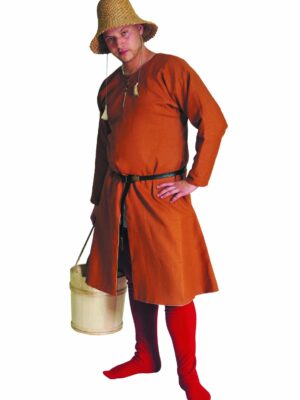
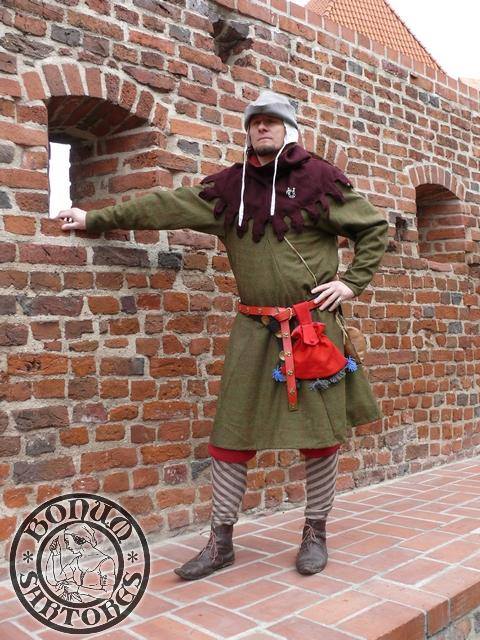
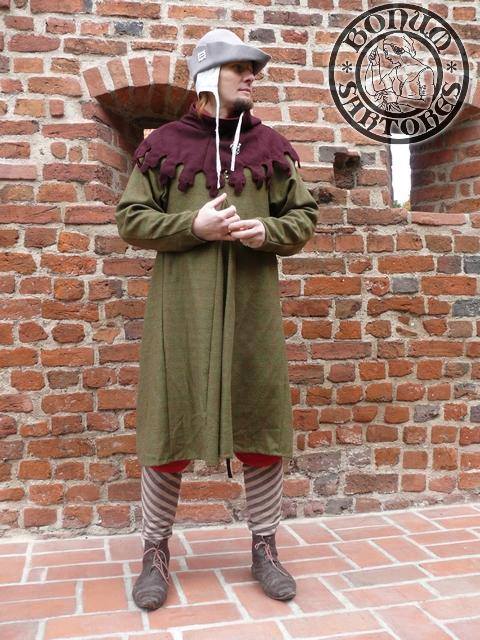
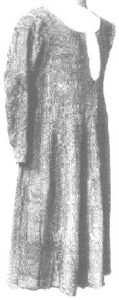
A reconstruction of a tunic based on the Herjolfsnes archaeological find no. 43 from a Norse settlement in Greenland. The original was discovered in a late medieval grave and is one of the best-preserved examples of men’s everyday clothing from that period.
The tunic is made of 2/2 twill wool – a fabric typical of Northern European clothing in the 14th century. Its cut includes four gussets widening the lower part, long, fitted sleeves, and side pocket slits, consistent with the original seam pattern. Originally, this medieval tunic had a keyhole neck opening (with a small slit), which likely made it easier to put on.
The Medieval Tunic Today
In historical reconstruction, the tunic is a fundamental element of clothing – comfortable, aesthetically pleasing, and faithful to ancient patterns. In our workshop, we sew tunics from natural fabrics: linen and wool, based on archaeological and iconographic sources. Each one captures the atmosphere of the era and is perfect for both everyday historical styling and reenactment events.
medieval tunic, medieval men’s clothing, medieval costume, historical reenactment, historical clothing, linen tunic, wool tunic, medieval men’s costume, historical reenactment, historical sewing
Related products
-

Cotte Tunic Linen 13th Century
127,75 € This product has multiple variants. The options may be chosen on the product page -
Cotte simple wool type 2
Price range: 220,69 € through 232,08 € This product has multiple variants. The options may be chosen on the product page -
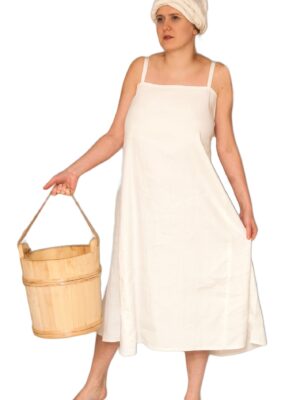
A chemise with straps
66,80 € This product has multiple variants. The options may be chosen on the product page -
Cotte simple wool type 1
Price range: 220,06 € through 224,69 € This product has multiple variants. The options may be chosen on the product page